

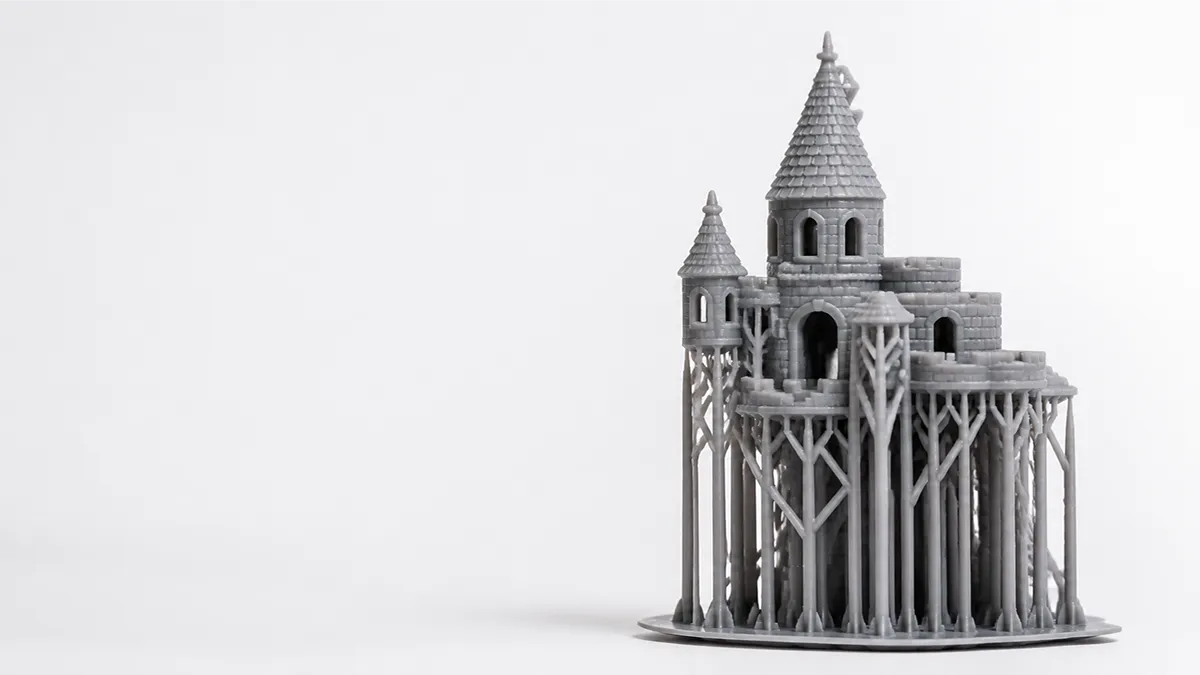
Research-based guide. Our picks are built from manufacturer specifications and community-verified user reports across the Bambu Lab ecosystem — not paid placements.
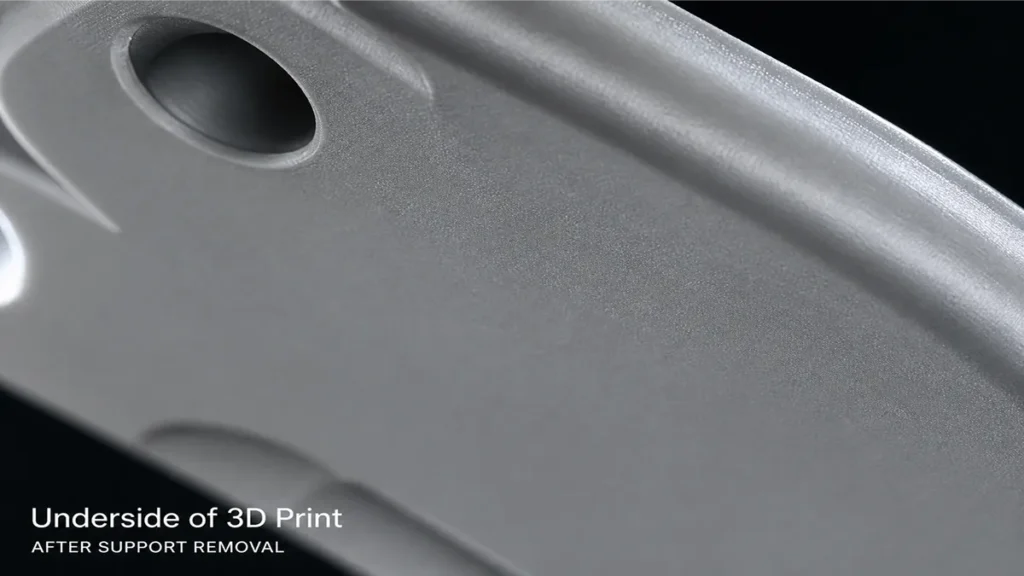
The best support filament for Bambu Lab turns painful support removal into a clean snap or a water bath — and gives you a pristine underside on the final part.
With an AMS, you can print supports in a different material from your model, which is the secret to professional-looking overhangs and bridges.
Below are the top support materials for 2026, based on manufacturer specs and community-verified reports, plus the slicer settings that make removal effortless on Bambu printers.
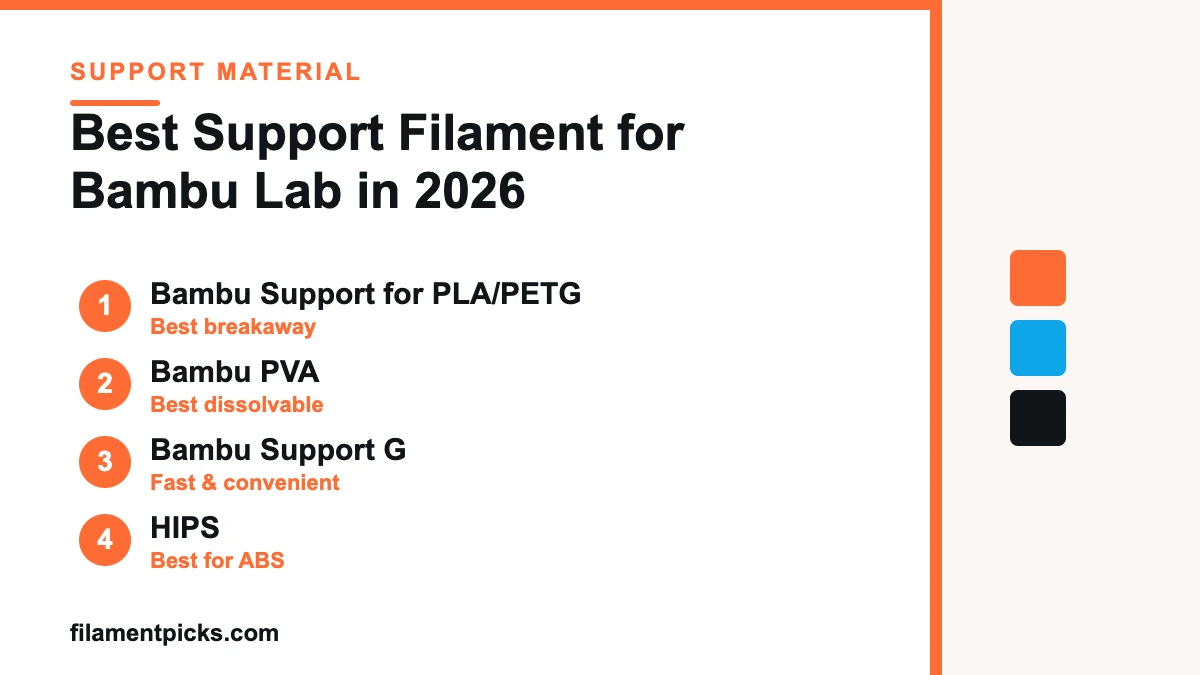
Best Support Filament for Bambu Lab at a Glance
| Use case | Top pick | Why |
|---|---|---|
| PLA/PETG models | Bambu Support for PLA/PETG | Tool-free breakaway interface, pristine surface |
| Fast & convenient | Bambu Support G | Quick breakaway when speed beats perfection |
| Complex geometry | Bambu PVA | Dissolves in plain water for hidden supports |
| ABS models | Bambu Support for ABS / HIPS | High-temp breakaway or dissolvable for ABS |
Breakaway vs Dissolvable Supports
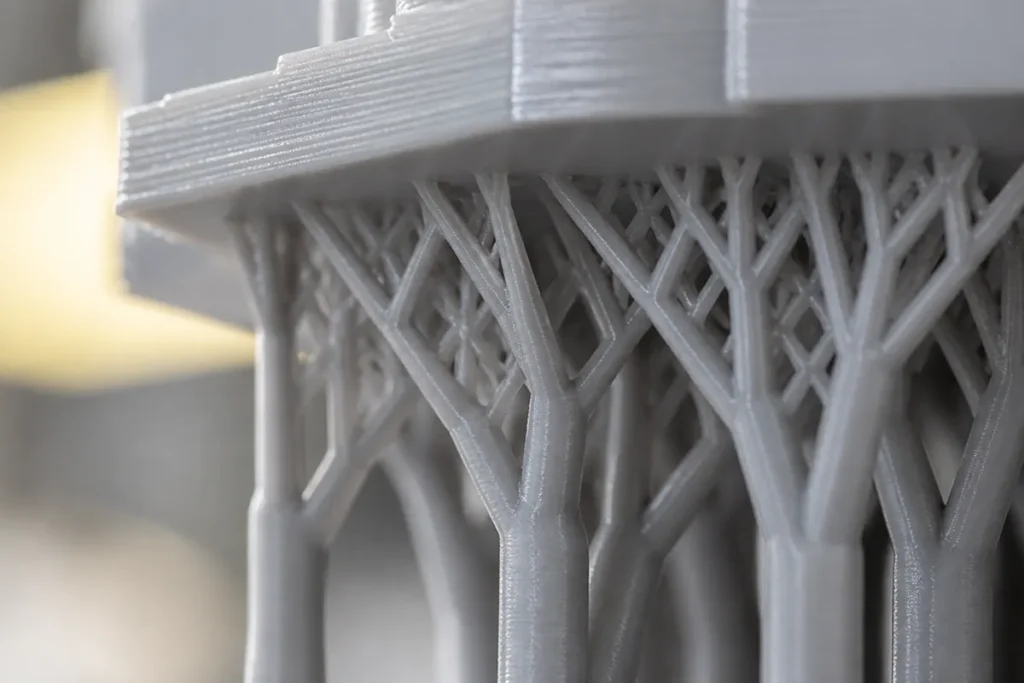
Breakaway supports (like Bambu Support for PLA/PETG) snap off by hand and leave a clean interface — ideal for most prints and far cheaper than soluble options. Dissolvable supports (PVA, HIPS) melt away in water or solvent, which is the only practical way to clear supports from enclosed cavities and intricate internal geometry.
On single-nozzle Bambu printers (A1, A1 Mini, P1S, X1C) the AMS swaps materials with a purge tower, so there’s some waste per color change. The dual-nozzle H2D dedicates one nozzle to support material and cuts that waste dramatically — see our H2D filament guide.
The Best Support Filaments for Bambu Lab
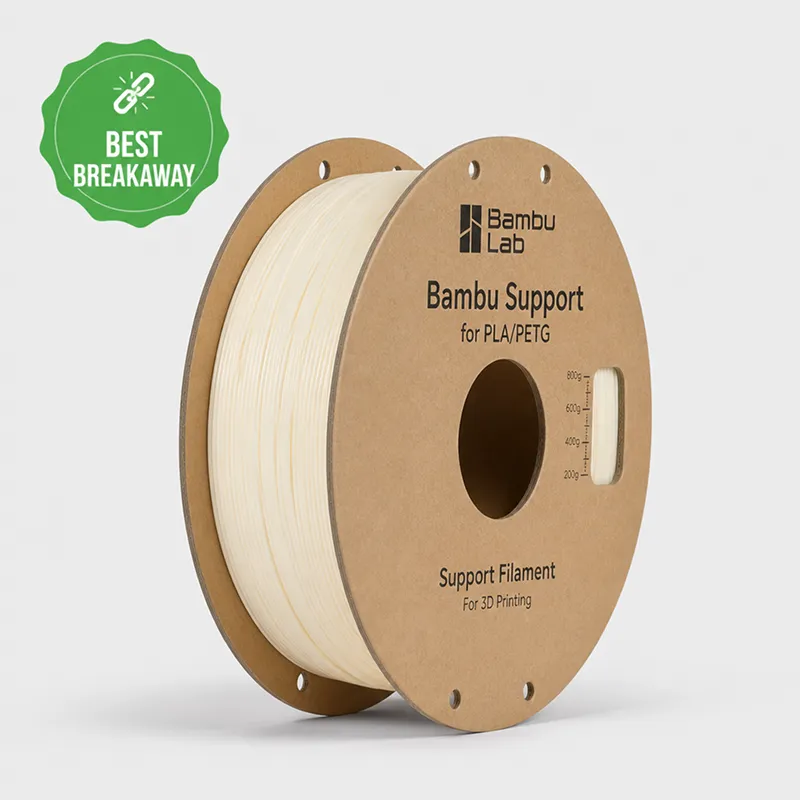
Bambu Support for PLA/PETG — Best Breakaway
This is the everyday pick. It’s a breakaway interface material designed to be used as the support interface (not the whole support body), giving tool-free removal and a pristine underside. It’s RFID-tagged and works on all Bambu printers plus the AMS and AMS Lite. Set it as the ‘Support/Raft Interface’ in your slicer.
Bambu PVA — Best Dissolvable
PVA dissolves cleanly in plain water (warm water around 40–50°C speeds it up), making it perfect for hard-to-reach supports and complex internal geometry. It’s premium-priced and very moisture-sensitive, so dry it before use and keep it sealed.
Bambu Support for ABS & HIPS — Best for ABS
For ABS models you need a high-temp support: Bambu Support for ABS (breakaway) or HIPS, which dissolves in limonene. Matching the support’s temperature range to ABS is what keeps adhesion and removal reliable.
Slicer Settings for Clean Support Removal
A few settings make a huge difference in how easily supports release. These are community-verified starting points in Bambu Studio / Orca.
| Setting | Recommended | Why |
|---|---|---|
| Interface material | Support for PLA/PETG | Clean snap-off, pristine surface |
| Support type | Normal (dense) | More reliable than tree for soluble interfaces |
| Top Z distance / gap | 0 for soluble; small for breakaway | 0 gap maximizes contact for PVA |
| Support density | 10–15% | Faster prints, easier removal |
| Dry PVA | 45–55°C before use | Wet PVA clogs and jams the AMS |
Do You Even Need Support Filament?
If your prints have gentle overhangs, you can often skip dedicated support material and use same-material supports. Dedicated support filament pays off when you need flawless undersides, steep overhangs, or supports inside cavities you can’t reach. For AMS multi-material setup, our AMS 2 Pro compatibility guide covers what loads alongside what.
Where to Buy
The community-verified support materials for Bambu printers and the AMS. Check current pricing before buying.
Frequently Asked Questions
What is the best support filament for a Bambu P1S or X1C?
For PLA and PETG models, Bambu Support for PLA/PETG (breakaway) is the easiest, cleanest choice. For complex hidden supports, Bambu PVA dissolves in water. Both work with the AMS via a purge tower.
Does PVA need to be dried?
Yes — PVA is extremely hygroscopic. Dry it at roughly 45–55°C before use and store it sealed, or it will clog and cause feeding errors in the AMS.
Can I use support filament for the whole support structure?
Bambu’s breakaway support is designed as the interface layer only, with normal model material forming the support body underneath. PVA can form full supports but uses more of an expensive material.
Do you need a second nozzle for support filament?
No. On the AMS the printer swaps materials through a single nozzle, laying down a purge tower to keep the transition clean. That’s what makes multi-material supports practical on a Bambu Lab machine without a tool-changer.
Breakaway or dissolvable — which should you start with?
Start with breakaway support for PLA/PETG; it’s cheaper and handles most prints. Move to dissolvable PVA only when supports hide inside cavities you can’t reach — the reason both earn a place among the best support filament for Bambu Lab picks.
How We Picked the Best Support Filament for Bambu Lab
Our ranking of the best support filament for Bambu Lab isn’t based on a single lab test or a sponsored placement. We weigh three things: published manufacturer specifications, the consensus from Bambu Lab owners across community forums and maker groups, and long-term value — how a spool behaves print after print, not just on day one. Where reports conflict, we favour the option that the most users can run reliably with stock profiles.
That’s why Bambu Support for PLA/PETG leads: it’s the support material we’d recommend to someone setting up their machine this week, with the fewest surprises. If your priority is different — a tighter budget, a specific colour, or maximum strength — the comparison above points you to the right alternative without having to test every spool yourself.
The Bottom Line
The best support filament for Bambu Lab depends on the print: Bambu’s breakaway Support for PLA/PETG for everyday clean undersides, and PVA when supports hide inside geometry you can’t reach. With the AMS handling the swap, professional overhangs get a lot easier.
FilamentPicks is reader-supported. When you buy through links on our site we may earn an affiliate commission at no extra cost to you. As an Amazon Associate we earn from qualifying purchases.