

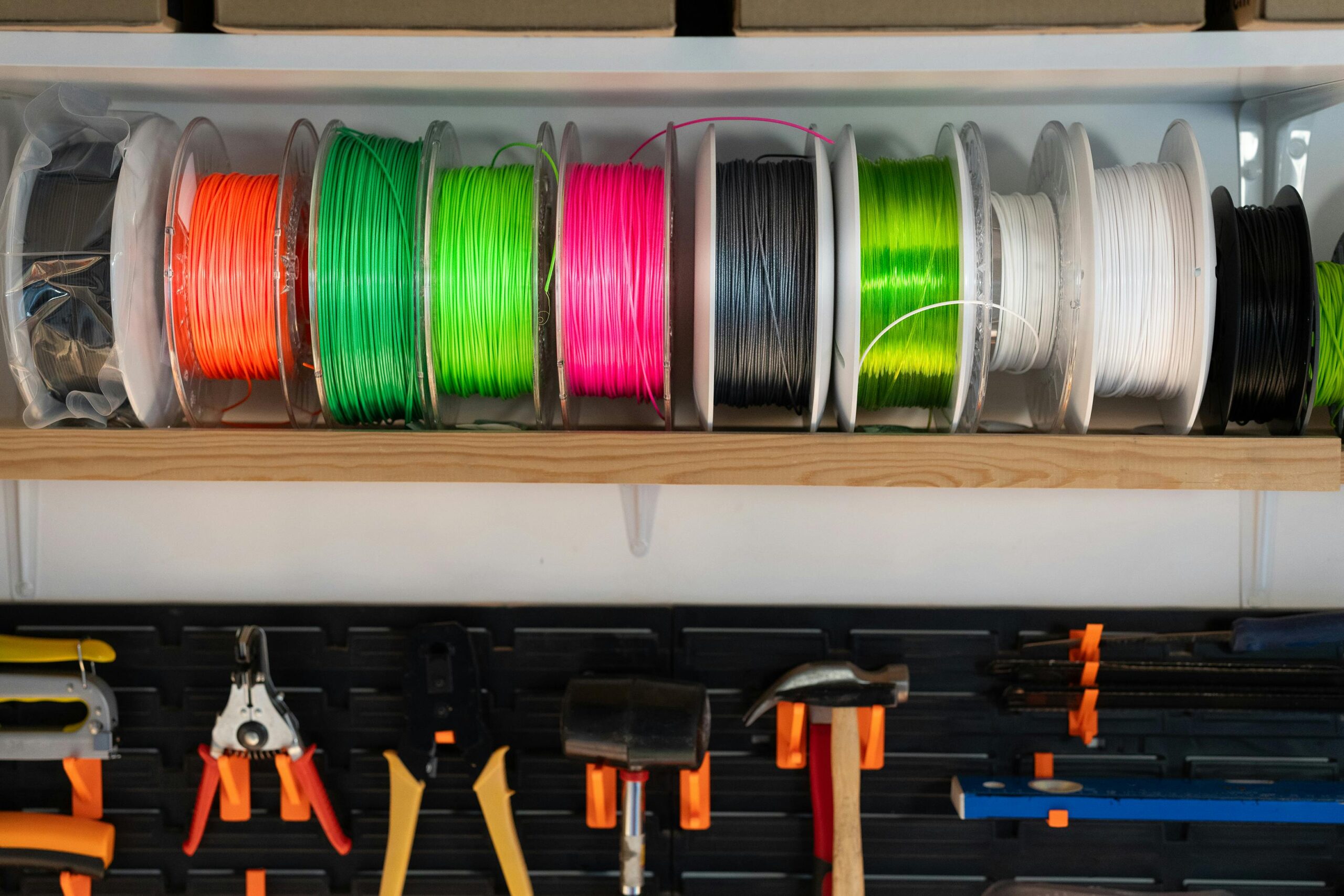
Knowing how to store filament properly is essential for every 3D printing enthusiast. Bad filament storage is the most common cause of print failures that have nothing to do with your printer settings. The symptoms — stringing that wasn’t there yesterday, a rough surface on a print that used to come out perfect, or a spool that snaps instead of bending — all trace back to one thing: moisture.
For this guide, we analyzed hundreds of posts across r/Bambulab, r/3Dprinting, and r/prusa3d, compiled the humidity specifications published by manufacturers including Bambu Lab, eSUN, Polymaker, and Prusament, and cross-referenced the storage tests run by several high-volume 3D printing content creators. The result is a practical, material-by-material reference that tells you exactly what your filament needs — and what happens when it doesn’t get it.
If you are also looking for which PETG to actually run, see our roundup: Best PETG Filament for Bambu Lab.
1. Why Moisture Destroys Filament
Most 3D printing filaments are hygroscopic — they absorb water from the air. This happens at the molecular level, where water molecules embed themselves into the polymer structure. Once absorbed, the moisture does not just sit there. When the filament reaches printing temperature, water vaporizes instantly, causing:
- Micro-bubbles in the melt, visible as a rough or foamy surface finish
- Popping and crackling sounds from the hotend during printing
- Increased stringing as moisture lowers the melt viscosity
- Reduced layer adhesion and weaker final parts
- Nozzle clogs from steam pressure interfering with extrusion flow
The damage is not always visible immediately. A partially moisture-affected spool may still print, just worse than it should. Many users spend hours tuning retraction or temperature for problems that would disappear entirely with proper storage Understanding how to store filament properly eliminates most of these frustrations before they start..
How fast does moisture absorb? Community research across multiple Reddit threads shows that Nylon left open in a humid environment (above 60% RH) can absorb enough moisture to affect prints in under six hours. PETG takes longer — typically 12 to 48 hours of open-air exposure at average indoor humidity before print quality degrades noticeably. PLA is the most forgiving, but even PLA stored open for several weeks in a humid climate will become brittle.
2. Humidity Limits by Material
The table below compiles manufacturer specifications and community-verified thresholds. RH% refers to relative humidity — the percentage of moisture in the air at a given temperature.
| Material | Max RH% | Sensitivity | Drying Temp / Time | Signs of Moisture |
|---|---|---|---|---|
| PLA | <45% RH | Low | 45°C / 4–6h | Brittle, snapping |
| PETG | <25% RH | Medium | 65°C / 4–6h | Stringing, bubbles |
| ABS / ASA | <25% RH | Medium | 80°C / 4–6h | Popping, weak layers |
| TPU / TPE | <20% RH | High | 50°C / 4–8h | Foaming, rough surface |
| Nylon (PA) | <15% RH | Very High | 80°C / 8–12h | Severe stringing, fails |
| PVA | <10% RH | Extreme | 45°C / 12–24h | Dissolves on spool |
| PC | <20% RH | High | 80°C / 6–8h | Cloudy, delamination |
Key takeaway: PETG, which is the most common filament on Bambu Lab printers, needs to be stored below 25% RH. Standard indoor air in most of Europe and North America sits between 40% and 60% RH — well above that threshold. An open spool of PETG on a shelf is absorbing moisture every hour.
3. How to Store Filament — Storage Methods Ranked (Worst to Best)
Option 1 — Open Shelf (Avoid)
Leaving spools on an open shelf exposes them to full ambient humidity. Fine for PLA if you print frequently and your space stays below 45% RH. Actively harmful for PETG, Nylon, TPU, and any engineering filament. Do not store PETG on an open shelf longer than a few days.
Option 2 — Resealable Zip Bags
A significant upgrade over open shelf storage at near-zero cost. Use the original bag the spool came in, or a 2-gallon zip bag with a silica gel packet inside. This slows moisture absorption substantially — community tests suggest PETG stored this way in a 50% RH environment stays print-ready for four to eight weeks, compared to days on an open shelf.
- Cost: free to $1 per bag
- Effectiveness: good for PLA, acceptable for PETG, marginal for Nylon
- Use desiccant packets rated for the bag volume — one 10g packet per spool minimum
Option 3 — Airtight Containers with Desiccant
Vacuum-seal bags, airtight storage bins (IKEA SAMLA boxes with a rubber seal, or dedicated filament containers), or dry boxes achieve the best passive storage results. Pair with fresh silica gel desiccant and a humidity indicator card to monitor conditions inside.
- Cost: $5–30 depending on container size
- Effectiveness: excellent for all materials including Nylon if desiccant is recharged regularly
- Replace or recharge desiccant when the indicator card shows above 15% RH inside the container
- Silica gel can be recharged by baking at 120°C for two hours — rechargeable indefinitely
Option 4 — Active Dry Box
An active dry box — either a commercial unit like the Sunlu Dryer S2 or a DIY version built from a food dehydrator — both stores and continuously dries filament. Many users run Nylon and TPU directly from a dry box during printing to prevent any moisture absorption mid-print.
- Cost: $30–80 for a commercial unit
- Effectiveness: the only reliable option for Nylon and PVA in humid climates
- Doubles as a filament dryer — see Section 4 for drying protocols
- Look for units with temperature control accurate to ±2°C — cheaper units overshoot and warp PLA spools
Option 5 — Vacuum Sealed with Desiccant (Best for Long-Term)
For filaments you will not use for months, vacuum sealing is the gold standard. A vacuum sealer with bags designed for food storage works perfectly for filament spools. Combined with fresh desiccant, a vacuum-sealed PETG spool stored in a cool location can stay print-ready for over a year according to manufacturer data from Polymaker and eSUN. This is the most effective way to store filament for the long term.
- Cost: $50–100 for a vacuum sealer, then $1–2 per bag
- Effectiveness: best available for long-term storage of any material
- Label the bag with the material, brand, color, and seal date
4. How to Dry Wet Filament
If your filament is already moisture-affected, drying it will often restore it to full print quality. The key variables are temperature and time. Too low and moisture does not escape. Too high and you warp the spool or anneal the filament.
Method A — Food Dehydrator or Dedicated Filament Dryer
The most practical option for most users. Set the temperature to match your material (see table in Section 2) and run for the specified time. Rotate the spool halfway through drying for even results. A $40 food dehydrator with temperature control handles everything except PC and high-temperature engineering filaments.
Method B — Oven
Works, but requires careful temperature calibration. Most oven thermostats are inaccurate by 10–20°C, and many ovens cannot hold temperatures below 60°C reliably. If using an oven, verify the actual temperature with an oven thermometer before placing any filament inside. PLA warps easily — never dry PLA in an oven above 45°C without verifying the actual temperature first.
Method C — Bambu Lab AMS
The AMS on the X1C and P1S has a heating function that can dry filament at a low temperature while the lid is closed. This is convenient for light moisture exposure but is not hot enough or long enough for heavily saturated spools. Use it for maintenance drying between prints, not as a rescue operation for a spool left open for weeks.
5. Warning Signs Your Filament Is Already Wet
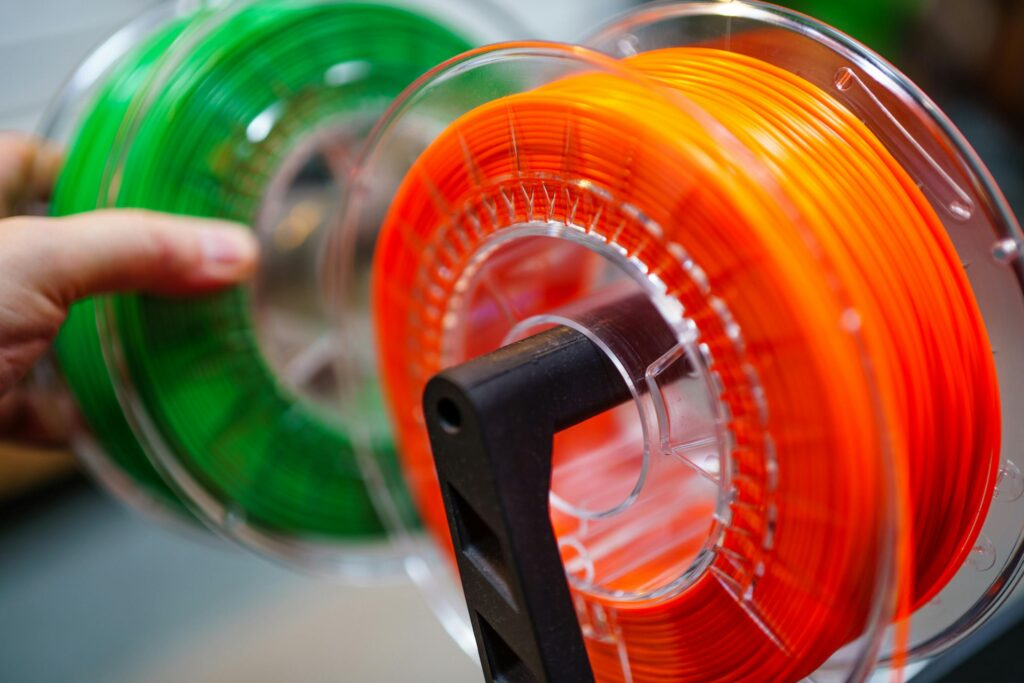
These symptoms do not always mean moisture — but moisture is the first thing to rule out before adjusting any print settings:
- Popping or crackling sounds from the hotend during printing — the clearest single indicator of moisture
- Stringing that appeared suddenly on a filament that used to print clean
- Rough, foamy, or matte surface on a filament that normally prints glossy (especially PETG)
- Visible steam or smoke rising from the nozzle during printing
- Filament that snaps instead of bending when you flex it — indicates hydrolytic degradation in PLA
- Inconsistent extrusion width on the outer wall, visible as a wavy or uneven line
- Dimensional inaccuracy on parts that were accurate before
The snap test is the fastest: take 20 cm of filament and bend it slowly. PLA, PETG, and ABS should bend significantly before breaking. If the filament snaps with minimal force, it has absorbed moisture and undergone partial degradation. Drying may restore print quality but will not fully reverse brittleness at the molecular level. Preventing this requires knowing how to store filament correctly before issues appear.
6. The Practical Storage Setup (By Budget)
Under $10 — Zip Bags + Desiccant
Buy a pack of 2-gallon zip bags and a 100g bag of rechargeable silica gel. Seal each spool individually with one or two 10g desiccant packets and a humidity indicator card. Recharge desiccant in the oven at 120°C every two months. Good enough for PLA and casual PETG use. If you are learning how to store filament on a tight budget, this is the starting point.
$20–40 — Airtight Bins
IKEA SAMLA 11L boxes with a tight-fitting lid hold two to three spools each. Add 50g of silica gel per box and a hygrometer to monitor the internal humidity. This setup handles PETG and ABS reliably. Check the hygrometer reading monthly This is how to store filament reliably for PETG and ABS without spending much..
$50–100 — Dedicated Dryer
A Sunlu Dryer S2 or similar unit with accurate temperature control covers both storage and drying. Run Nylon and TPU directly from it during printing. This is the setup most serious Bambu Lab users converge on after a few bad prints from a wet spool. For serious users who want to know how to store filament at the highest level, this is the answer.
Frequently Asked Questions
Does PETG really need to be stored differently from PLA?
Yes. PETG absorbs moisture roughly three times faster than PLA and is significantly more sensitive to the effects. PLA stored open for a week may still print fine. PETG stored open for 24 hours in a humid room will often show visible print quality degradation. If you print PETG regularly on a Bambu Lab printer, airtight storage with desiccant is not optional — it is maintenance.
Can I dry filament in my Bambu Lab AMS?
The AMS drying function works for mild moisture exposure — a spool that absorbed some humidity over a few days. For heavily saturated filament, especially Nylon or TPU, the AMS does not get hot enough or run long enough. Use a dedicated filament dryer for anything beyond light maintenance drying.
How do I know if my silica gel still works?
Silica gel with a color indicator (blue to pink, or orange to green depending on type) changes color when saturated. If it has changed color, recharge it by baking at 120°C for two hours in a standard oven until it returns to its original color. Silica gel can be recharged hundreds of times.
Is it safe to store filament in a car or garage?
A garage with temperature swings is one of the worst storage environments for filament. Temperature cycling causes the spool and container to contract and expand, which can break even a sealed container’s airtight seal over time. High summer temperatures can also warp PLA spools permanently. If you store filament in a garage, use a hard airtight container with fresh desiccant and check it more frequently than indoor storage. Knowing how to store filament in non-ideal environments like garages is especially important for long-term material quality.
How long does filament last in proper storage?
PLA stored in a vacuum-sealed bag with desiccant in a cool, stable environment can remain print-ready for three to five years. PETG and ABS similarly stored last two to four years. Nylon and PVA are more variable — two years is a reasonable expectation under good conditions. Once opened and exposed to air, the clock starts over — get it sealed again as quickly as possible These estimates assume you know how to store filament correctly from the start..
What humidity level should I target inside my storage container?
Below 25% RH for PETG, ABS, and TPU. Below 15% RH for Nylon and PVA. Below 45% RH for PLA. A cheap digital hygrometer placed inside the container gives you a real reading. Desiccant alone without monitoring is guesswork — the hygrometer is a $5–10 investment that eliminates uncertainty entirely. Monitoring humidity is an essential part of how to store filament correctly.
What to Do Next
Proper storage is the foundation — but it only matters if your filament was worth storing in the first place. If you are running PETG on a Bambu Lab printer and want to know which brands are worth buying before you open them, we researched seven options and ranked them by print quality, bed adhesion, and consistency across spools. Once you know how to store filament correctly, your spools will last years instead of months.
See the full rankings: Best PETG Filament for Bambu Lab (2026).
And if you are dialing in your print settings after rescuing a wet spool, our settings guide covers every parameter: PETG Print Settings for Bambu Lab.
For manufacturer humidity and storage specifications, refer to the official Polymaker filament storage guidelines