

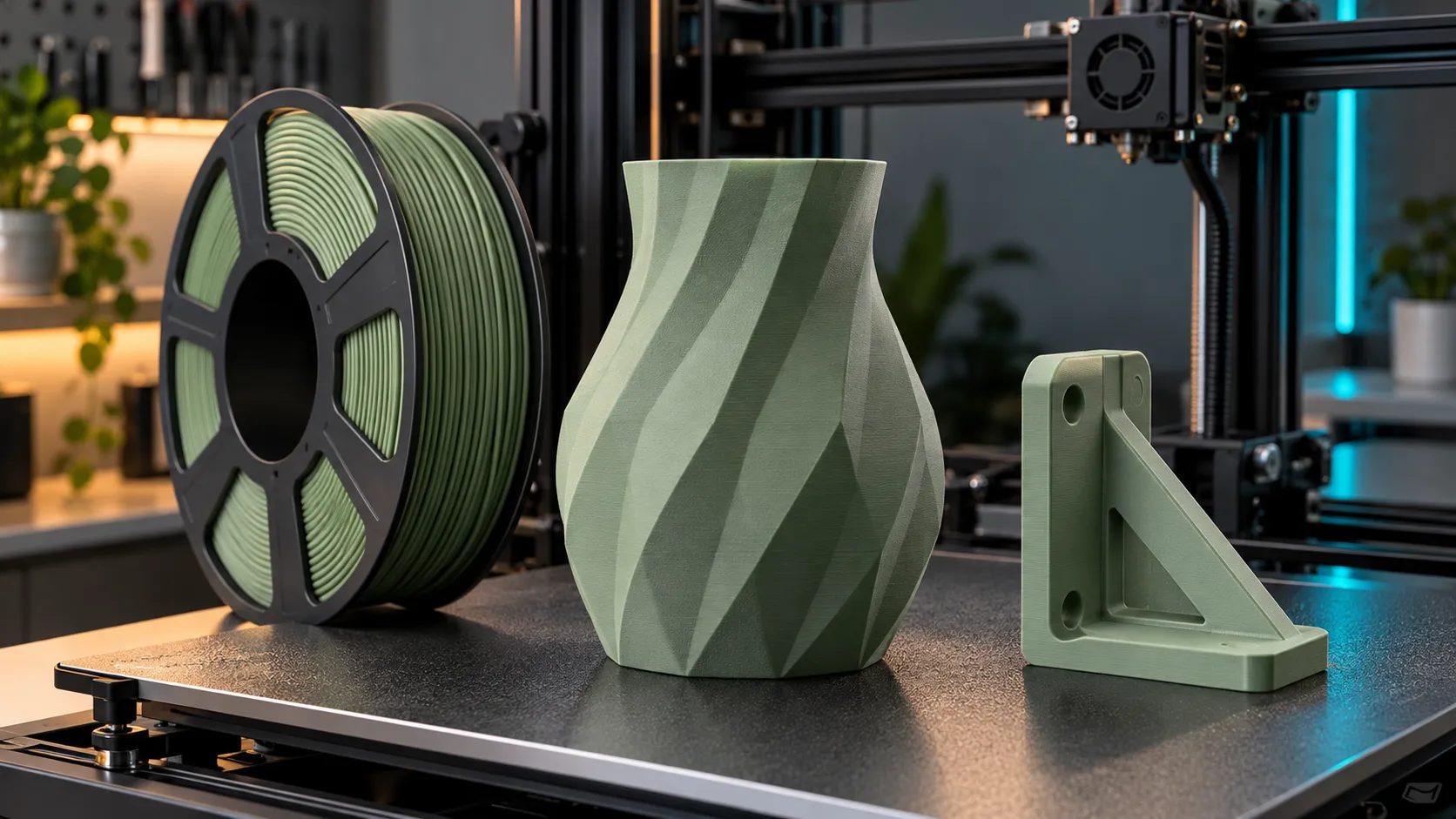
Bambu Lab PETG Matte is one of the most interesting filament launches of 2026 because it targets the exact complaint many makers have about ordinary PETG: the glossy, slightly plastic-looking surface. Bambu says its new formula combines a low-gloss finish with easier printing, improved ambient-moisture resistance and cleaner support removal. Here are the seven facts that actually matter before you buy.
Research-based guide, updated October 2026. Disclosure: This article contains affiliate links. If you buy through them, we may earn a commission at no extra cost to you. We have not physically tested this filament. See the Affiliate Disclosure.
1. Bambu Lab PETG Matte is designed for a genuinely matte finish
The headline feature is not simply a new color palette. The material is formulated to scatter light more evenly, helping layer lines look less obvious and making utility parts, organizers, enclosures and decorative models appear more refined. It is a useful middle ground for anyone who wants PETG durability without the familiar glossy surface.
2. The 2026 launch includes eight colors
Bambu introduced eight muted and practical colors. That matters because matte materials often work best when the palette feels intentional: dark neutrals suit machine parts, while softer colors suit home organization and display objects. Always check current availability before choosing a large multi-part project.
3. Printing should feel closer to PLA
Bambu positions PETG Matte as easier to print than traditional PETG. Expect the usual PETG fundamentals—clean build plate, controlled cooling and a sensible first layer—but less tuning friction. Start with the official profile in Bambu Studio or OrcaSlicer, then run a flow calibration when dimensional accuracy matters.
| Priority | Starting point | Why it matters |
|---|---|---|
| Nozzle | Use the official profile | Reduces guesswork |
| Build plate | Clean with dish soap and water | Improves first-layer consistency |
| Cooling | Profile default, then tune bridges | Balances strength and detail |
| Calibration | Flow and pressure advance | Sharper corners and better dimensions |
4. Moisture resistance is improved, not unlimited
The manufacturer highlights better resistance to moisture picked up from normal room air. That is useful, but it does not make the spool immune to humidity. Popping, rough surfaces and stringing still point to wet filament. Store opened spools in a sealed box with fresh desiccant and dry when symptoms appear. See our filament drying guide for a safe workflow.
5. Support removal should be easier
Support interfaces are often the frustrating side of PETG because the material can bond aggressively to itself. Bambu specifically calls out easier support removal. That could make PETG Matte especially useful for brackets, housings and complex functional geometry, although interface distance and cooling still deserve a small test before a long print.
6. It is not automatically stronger than every PETG
A matte appearance does not prove higher strength. Choose this material primarily for finish, workflow and PETG-class usefulness—not because the word “matte” implies a mechanical upgrade. For maximum performance, compare the official technical sheet with the exact load, temperature and chemical exposure of your part.
7. The best use cases are practical and visible
- Desk and workshop organizers
- Electronics housings and brackets
- Camera and lighting accessories
- Cosplay armor panels
- Display-ready functional prototypes
If you print on a Bambu machine, our Bambu P2S PETG settings guide explains the calibration logic that transfers well to a new PETG formula.
Where to buy Bambu Lab PETG Matte
Before buying Bambu Lab PETG Matte, check current colors, availability and shipping. If PETG Matte is unavailable, compare a Polymaker PETG alternative and validate the finish on a small print.
Amazon links use tag filamentpicks-20. Use Polymaker code BALUTAVLAD for 15% off your first eligible order. Purchases may support FilamentPicks at no extra cost to you.
Frequently Asked Questions
Is Bambu Lab PETG Matte easier than regular PETG?
Bambu describes it as PLA-like to print, but it remains PETG and still benefits from a clean plate, dry storage and profile-based tuning.
Does PETG Matte need drying?
It can tolerate ambient humidity better than some PETG, but dry it when you see popping, stringing or a rough surface.
Is it good for outdoor parts?
PETG is commonly chosen for practical parts, but confirm UV, heat and load requirements for your specific application.
FilamentPicks Verdict
Bambu Lab PETG Matte looks like a smart 2026 option for makers who want PETG utility with a more professional surface. Its strongest selling point is the combination of appearance and easier workflow, not a promise that it replaces every engineering filament.