

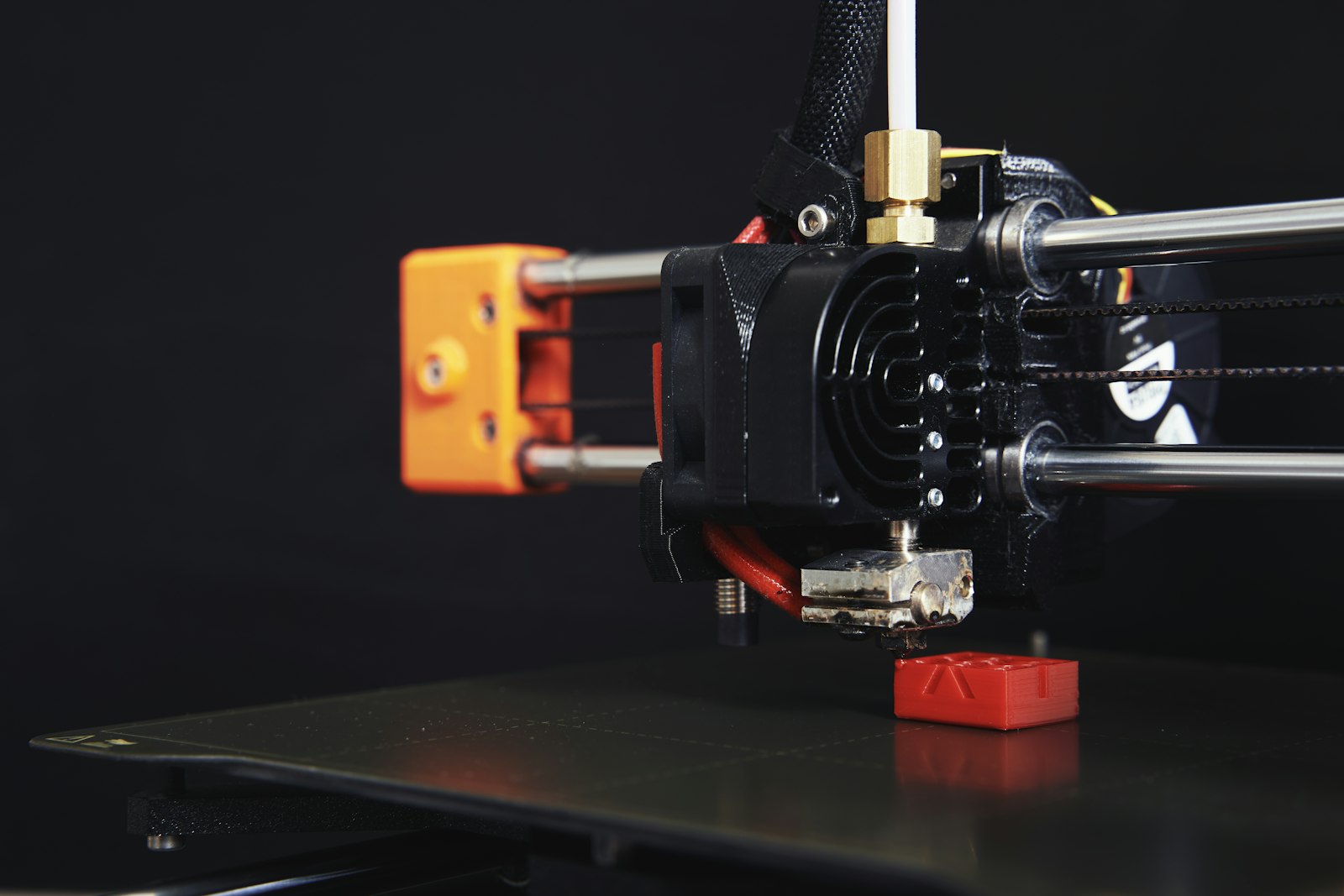
The H2S is not simply a larger single-nozzle printer. Bambu specifies a 350°C all-metal hotend, a 120°C bed, active chamber heating up to 65°C, and hardened steel in both the nozzle and extruder gear. Those specifications make the machine relevant for polymers that would be impractical on a basic open-bed printer. They do not make every spool plug-and-play.
This article separates four questions that are often collapsed into one: can the hotend melt the material, can the chamber control warping, can the hardware tolerate the filler, and can the chosen feeder deliver the filament reliably? It uses Bambu’s official published specifications; third-party blends and firmware behavior can vary, so verify the live product and filament guides before a critical job.
Bambu H2S filament compatibility matrix
The Bambu H2S filament compatibility list includes PLA, PETG, TPU, PVA, BVOH, ABS, ASA, PC, PA, PET, and PPS, plus multiple CF/GF-reinforced families. A listing is not a promise that every formulation will produce a perfect part. The safest interpretation is that the printer platform has a supported path when the exact material is paired with appropriate settings and accessories.
| Filament family | H2S suitability | Hardware / environment | Primary risk |
|---|---|---|---|
| PLA, PLA Matte, PLA Silk | Easy | 0.4 mm general-purpose nozzle; avoid excessive chamber heat | Heat creep, weak silk interlayer strength, formulation differences |
| PETG and high-flow PETG | Easy to moderate | Dry spool, suitable plate interface, calibrated flow | Stringing, nozzle buildup, excessive plate adhesion |
| ABS / ASA | Well matched | Enclosure, stable chamber, ventilation | Warping, shrinkage, fumes |
| TPU | Conditional | Approved direct/AMS route for the exact hardness | Feed-path buckling and excessive drag |
| PA / PC / PET | Moderate to advanced | Drying, hot bed/chamber, plate matched to material | Moisture, warping, poor bonding if conditions fluctuate |
| PPS and other high-temperature grades | Advanced | Exact official profile, correct plate, ventilation, dry material | High process demands and formulation-specific limits |
| PLA-CF, PETG-CF, PA-CF/GF, PC-CF and similar | Supported with conditions | Hardened nozzle; consider 0.6 mm; wear-resistant path | Abrasion, clogging, and overly aggressive flow |
| PVA / BVOH support | Conditional | Very dry storage and compatible automatic route | Moisture swelling, brittle feeding, difficult unloading |
What the H2S thermal system actually enables
For Bambu H2S filament compatibility, thermal maximums describe the machine’s envelope, not recommended settings. Printing a low-temperature material at the maximum nozzle or chamber setting would be counterproductive. PLA usually benefits from keeping the chamber cooler, while ABS, ASA, PC, and some nylon formulations benefit from controlled warmth. Follow the filament maker’s range and use the lowest stable process temperature that produces sound bonding and flow.
Why chamber temperature matters
Large engineering parts accumulate stress as deposited lines cool and contract. A warm chamber reduces the temperature difference between freshly extruded plastic and the existing part, which can reduce corner lift and layer splitting. Active heating improves repeatability, but geometry still matters: thick-to-thin transitions, sharp corners, poor orientation, and a contaminated bed can defeat an otherwise correct temperature.
When to keep the chamber cooler
PLA can soften too early in the feed path when ambient heat, nozzle temperature, slow extrusion, and weak hotend cooling combine. If PLA extrusion stops mid-print, do not immediately increase temperature. Check for heat creep, verify cooling, and use the printer’s recommended door or ventilation state. Our Bambu nozzle-clog guide explains how to distinguish a restriction from a feed problem.
Nozzle diameter and material choice
Nozzle diameter is a core part of Bambu H2S filament compatibility. Bambu lists 0.2, 0.4, 0.6, and 0.8 mm options; the standard 0.4 mm size offers the broadest profile support. The smaller 0.2 mm nozzle is for detail, not a universal quality upgrade; filled material can bridge its tiny opening. For abrasive blends, hardened construction matters, and 0.6 mm often provides a sensible balance of particle clearance and feature resolution.
| Diameter | Choose it for | Avoid or reconsider when | Profile effect |
|---|---|---|---|
| 0.2 mm | Fine lettering, miniatures, subtle surface features | The filament contains fibers, glitter, wood, metal powder, or coarse pigment | Lower layer height and flow; much longer print time |
| 0.4 mm | Most everyday parts and standard filament | A heavily filled blend repeatedly clogs or the part prioritizes throughput | Largest selection of tested profiles |
| 0.6 mm | Functional parts and many CF/GF formulations | Very small holes, tiny text, or thin decorative walls dominate | Recalibrate flow and use matching line widths |
| 0.8 mm | Large, thick, fast-deposition parts | Surface detail and dimensional microfeatures matter | Throughput may become the limit before motion speed |
A physically installed nozzle must match the slicer selection. Otherwise, line widths, layer-height constraints, and volumetric calculations are built on the wrong opening. For material-specific wear decisions, see hardened vs stainless Bambu nozzles.
Which AMS units work with the H2S?
AMS routing is another layer of Bambu H2S filament compatibility. Bambu’s H2S FAQ lists the original AMS, although that first-generation unit does not add active drying. Current H2-series configurations can use AMS 2 Pro and AMS HT, with a maximum system arrangement of four AMS 2 Pro plus eight AMS HT units—24 input slots. That headline count is a system maximum, not a reason to connect every material type automatically.
The H2S is not compatible with AMS Lite. AMS Lite is designed for A1-series printers and uses a different architecture. If you already own one, do not assume that an adapter or a matching connector makes it supported.
Spool and filament checks before automatic loading
- Make sure the spool rotates without rubbing the lid, divider, or adjacent spool.
- Check that cardboard edges are intact and do not shed debris into the feeder.
- Do not route a soft flexible filament unless the exact AMS documentation permits it.
- Keep PVA, BVOH, PA, PC, and other hygroscopic materials genuinely dry during the print.
- Configure third-party material manually when RFID data is unavailable.
When a spool repeatedly retracts or clicks, isolate the section of the path before dismantling anything. The problem may be the spool, first-stage feeder, tubing, extruder, or hotend. Our Bambu AMS jamming guide provides a safe diagnostic order.
Profiles, flow, and Bambu’s speed claims
Bambu H2S filament compatibility also depends on realistic flow. Bambu publishes a standard hotend benchmark of 40 mm³/s and an optional high-flow figure of 65 mm³/s under specific test conditions: Bambu ABS at 280°C on a single-wall round model. Those numbers are useful hardware reference points, not a universal setting for PLA, PETG, filled nylon, or a detailed real-world part. Maximum volumetric speed must stay inside the melt capacity of the actual material, temperature, nozzle, and geometry.
Start with the exact Bambu profile when using a supported first-party filament. For a third-party spool, clone the closest safe generic profile and identify it clearly by brand, product, and color. Then calibrate in a controlled order. The third-party filament setup guide covers profile creation, while our Bambu flow calibration guide separates flow ratio, pressure advance, and volumetric limits.
A six-step H2S setup workflow
A dependable Bambu H2S filament compatibility decision follows the same order every time: identify, dry, match the hardware, choose a conservative profile, calibrate, and validate.
| Step | Action | Pass condition |
|---|---|---|
| 1 | Identify the exact polymer, filler, hardness, and manufacturer | The spool is not being treated as generic “plastic” |
| 2 | Dry it within the manufacturer’s temperature limit | No steam, popping, foamy surface, or abnormal brittleness |
| 3 | Choose nozzle, plate, and direct/AMS feed route | Every component is supported for the material |
| 4 | Select or clone an appropriate filament profile | Temperatures and cooling begin in a conservative range |
| 5 | Calibrate flow behavior before maximum throughput | Walls and corners are clean at moderate speed |
| 6 | Print a representative coupon, not only a decorative cube | It tests overhangs, holes, walls, and bonding relevant to the final part |
For hygroscopic polymers, “dry once” is not a permanent state. A long print can expose filament for many hours. Learn how temperature, time, and storage interact in our filament drying guide.
Validate with a coupon that resembles the final part
A decorative cube is useful for checking basic motion, but it rarely tests the reason you chose an H2S. Build a compact coupon with the smallest hole, thinnest wall, longest bridge, steepest overhang, and thickest high-flow section found in the final design. Add a tall corner if warping is the main concern and a support interface if the job will use a second material. Print it with the same nozzle, plate, chamber state, layer height, and filament route planned for production.
Inspect more than surface finish. Break or bend a sacrificial section to compare layer bonding, measure holes after the part reaches room temperature, and check the underside where heat accumulates. A coupon that fails in a representative feature gives actionable evidence; a perfect-looking cube can still hide inadequate melt capacity, chamber stress, or an incompatible support pair. Record the result with the exact profile name so the next spool is compared against a known baseline.
Troubleshoot the system, not only the temperature
When a nominally supported spool fails, revisit the complete Bambu H2S filament compatibility chain instead of changing nozzle temperature alone.
Weak layers or a matte, starved surface
Confirm dryness and actual extrusion first. Then check nozzle temperature, fan strategy, maximum volumetric speed, and chamber state. Weak layers at high speed can be a throughput limit rather than proof that the material needs an extreme temperature.
Warped corners or cracked walls
Clean the plate, verify the correct plate selection, add a brim if geometry warrants it, stabilize the chamber, and reduce drafts. For ABS/ASA/PC/PA, orientation and wall design may need correction even when adhesion is strong.
Repeated feeder resistance
Unload the material and inspect the spool, tubing bends, filament diameter, and tip shape. Do not keep retrying an unsupported soft or brittle filament through an automatic route; repeated grinding creates a second problem on top of the first.
Bambu H2S filament compatibility FAQ
Can the H2S print nylon and polycarbonate?
Yes. Bambu lists PA and PC among supported material families. Successful parts still require dry filament, a suitable plate, stable chamber conditions, and a profile matched to the exact formulation.
Can the H2S print carbon-fiber filament?
Yes, multiple reinforced families are listed. Use wear-resistant hardware and consider a 0.6 mm hardened nozzle for particle clearance. Confirm the exact product profile rather than treating every CF blend alike.
Does AMS Lite work with the H2S?
No. Bambu identifies AMS Lite as incompatible with the H2S. Use an H2-compatible AMS configuration from the official product documentation.
Is 65 mm³/s a safe setting for every filament?
No. It is an optional high-flow benchmark measured under specified conditions, not a universal material value. Calibrate maximum volumetric speed for the actual spool, nozzle, and temperature.
What is the best all-purpose H2S nozzle?
The 0.4 mm nozzle is the most versatile starting point. Move to 0.6 mm for many abrasive composites or higher-throughput functional parts, and use 0.2 mm only when fine detail justifies the increased clog risk and print time.
Official sources
- Bambu Lab H2S product page, specifications, filament list, and FAQ
- Bambu Lab: flow dynamics calibration
- Bambu Studio source: maximum volumetric speed definition