

Research-based guide. Our picks are built from manufacturer specifications and community-verified user reports across the Bambu Lab ecosystem — not paid placements.
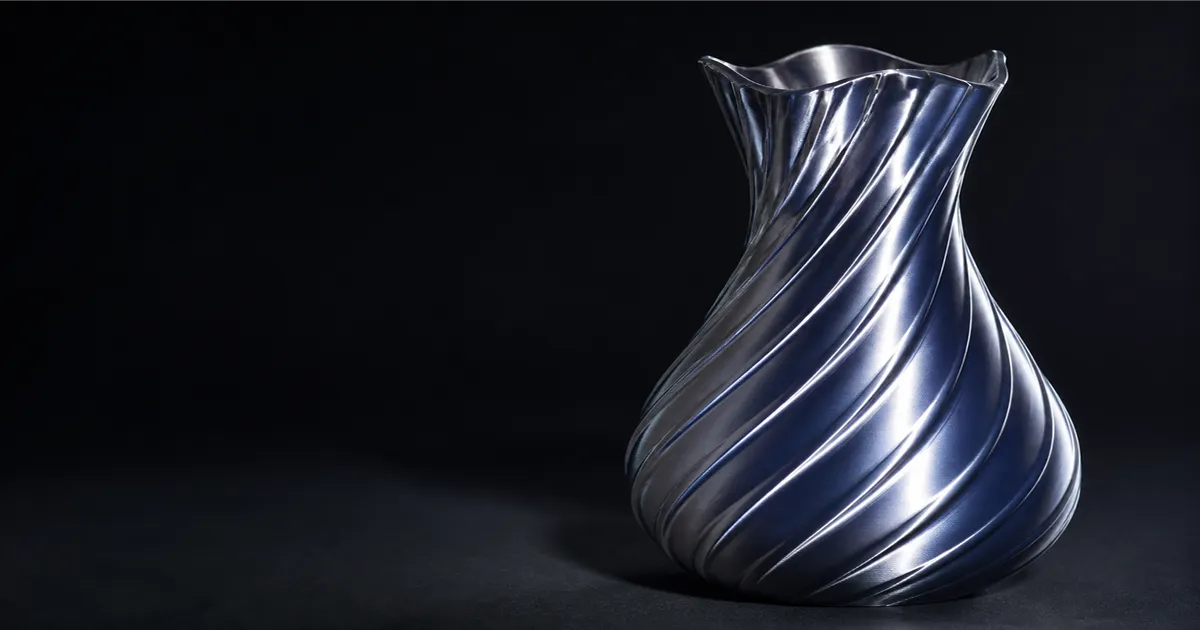
The best silk PLA filament for Bambu Lab delivers that eye-catching glossy, metallic sheen that makes vases, lightsabers and display models look almost injection-molded. Silk PLA uses additives that give the surface a reflective shine standard PLA can’t match.
Below are the top silk PLA picks for 2026, based on manufacturer specs and community-verified reports, including single-color, dual-color and tri-color options — plus the print settings that get the shiniest, cleanest results.
Best Silk PLA for Bambu Lab at a Glance
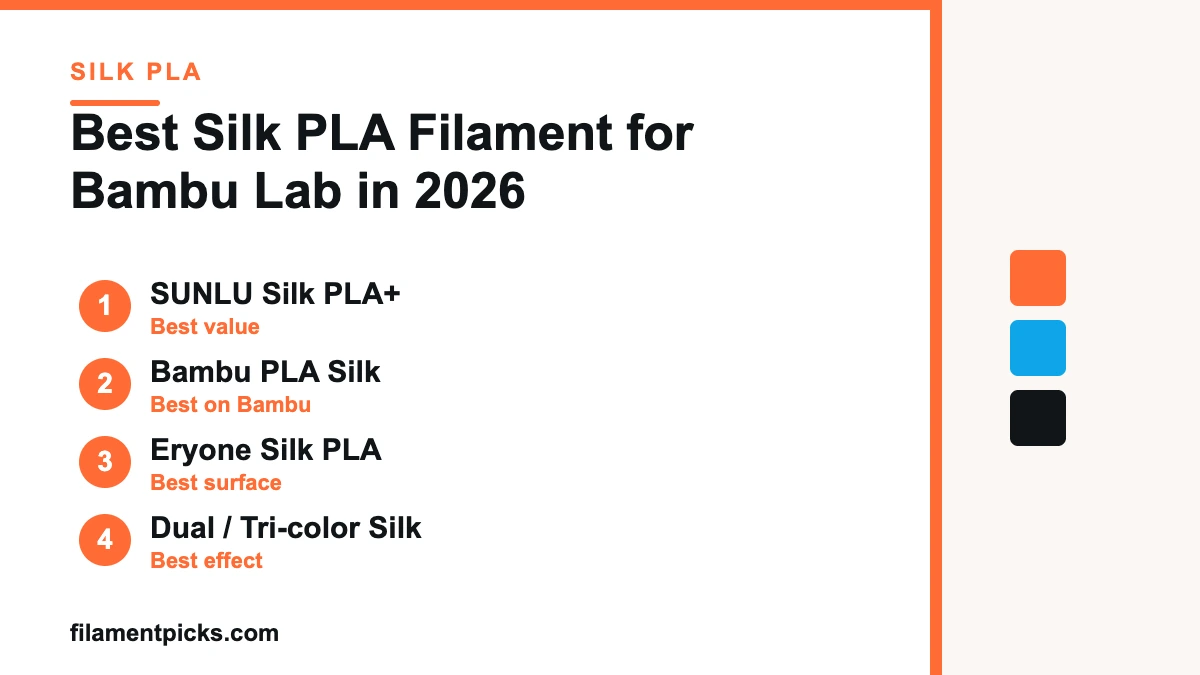
| Use case | Top pick | Why |
|---|---|---|
| Best value | SUNLU Silk PLA+ | Glossy metallic finish, AMS/refill compatible, low cost |
| Best on Bambu | Bambu PLA Silk | Controllable gloss, especially strong metallics |
| Best surface | Eryone Silk PLA | Smooth, vivid shine reported by users |
| Best effect | Dual / tri-color silk | Dynamic color transitions on a single print |
What to Know Before You Print Silk PLA
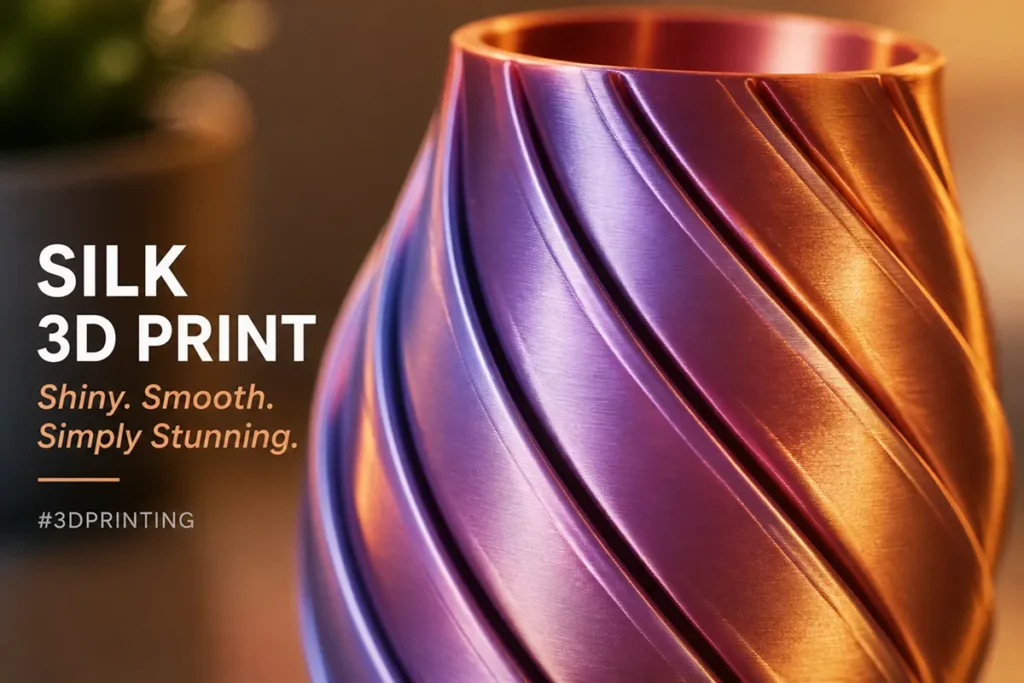
Silk PLA looks fantastic, but the additives that create the shine also reduce layer adhesion — so silk parts are weaker than standard or matte PLA and aren’t ideal for functional, load-bearing prints. Treat silk as a display and aesthetic material.
It also tends to ooze and string more, and a few silk brands can be brittle or feed unevenly in the AMS. Buying a known-good brand and printing a little hotter solves most of this.
The Best Silk PLA Filaments
SUNLU Silk PLA+ — Best Value
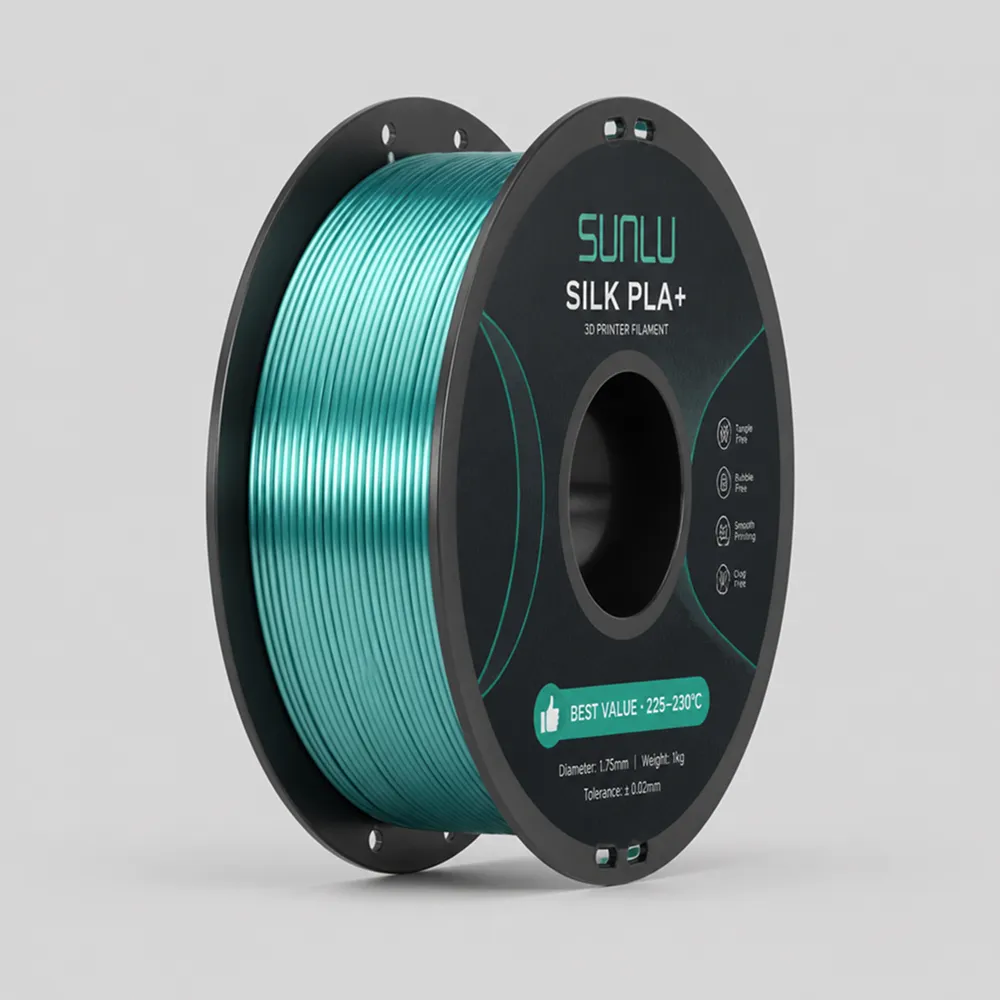
SUNLU’s silk PLA+ is the community value pick: a smooth, glossy, metallic finish at a budget price, with tight diameter tolerance and Bambu refill/AMS compatibility. Its updated spool design feeds cleanly.
Bambu PLA Silk — Best on Bambu Hardware
Bambu’s own silk PLA offers controllable gloss and notably good metallics — the silver and gold are widely praised for being genuinely shiny rather than dull. The RFID profile keeps things simple.
Dual- and Tri-Color Silk — Best Effect
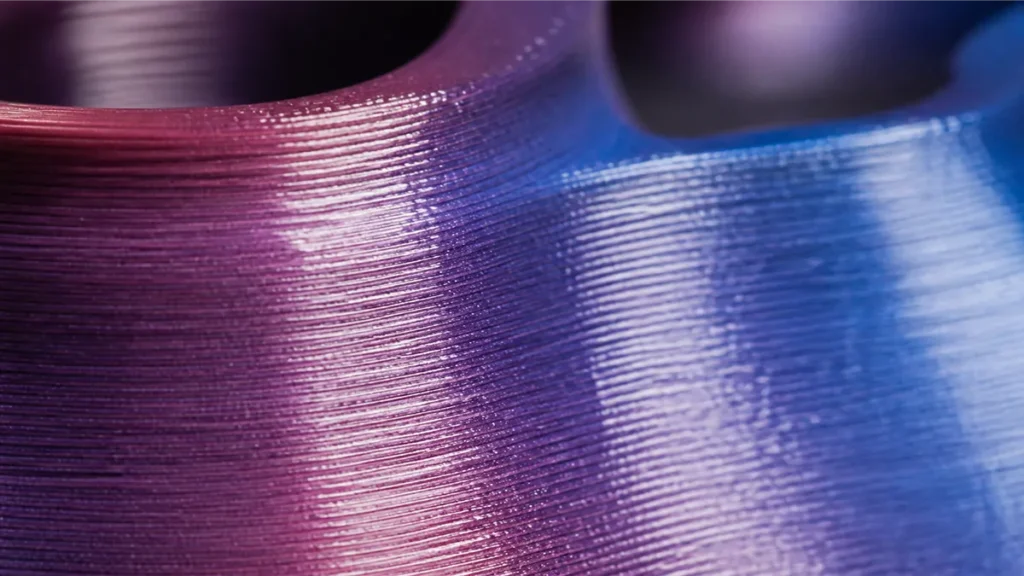
Dual- and tri-color silk PLAs transition between shades along the print for a dramatic, dynamic look with no AMS color-swapping. Expect some color blending at the transitions, which is part of the effect.
Silk PLA Print Settings on Bambu Lab
Silk PLA prints best a little hotter than standard PLA so the strands fuse and stay glossy. Start here and tune for stringing.
| Setting | Recommended | Notes |
|---|---|---|
| Nozzle | 225–230°C | Hotter than standard PLA for best shine |
| Bed | 55–60°C | Standard PLA bed temps work fine |
| Speed | Moderate | Slower walls look glossier and cleaner |
| Walls | 3+ | More walls deepen the metallic effect |
| Retraction | Tuned | Silk strings easily — dial in retraction |
Silk vs Matte: Picking a Finish
Silk is glossy and reflective; matte is flat and hides layer lines. Choose silk for shine and drama, matte for a premium, no-glare look. If strength matters, skip both and use basic PLA.
Compare in our best matte PLA guide and the best PLA filament guide.
Where to Buy
The community-verified silk PLA picks that shine on Bambu printers. Check current pricing before buying.
Frequently Asked Questions
Is silk PLA strong enough for functional parts?
Not really. The silk additives reduce layer adhesion, so silk PLA is weaker than standard or matte PLA. Use it for display pieces, vases and decorative models rather than load-bearing parts.
Why is my silk PLA stringing?
Silk PLA oozes more than standard PLA. Tune retraction, keep the filament dry, and avoid excessive nozzle temperature — but don’t go too cool or you’ll lose the shine. Around 225–230°C is the usual balance.
Does silk PLA work in the AMS?
Mostly yes. Stick to reputable brands like SUNLU, Bambu or Eryone; some cheaper silks are brittle or feed unevenly and can jam the AMS.
Is silk PLA good for functional parts?
Not really — silk PLA is built for looks. The additives that create the sheen reduce layer adhesion, so keep it for display pieces and reach for Basic PLA or PETG when a part has to bear load.Why does silk PLA print best a little hotter?
The sheen develops at higher melt temperatures. Printing 5–15°C hotter than Basic PLA gives the glossiest result, which is why the best silk PLA filament for Bambu Lab really shines with a small temperature bump and slower speeds.How We Picked the Best Silk PLA Filament for Bambu Lab
Our ranking of the best silk PLA filament for Bambu Lab isn’t based on a single lab test or a sponsored placement. We weigh three things: published manufacturer specifications, the consensus from Bambu Lab owners across community forums and maker groups, and long-term value — how a spool behaves print after print, not just on day one. Where reports conflict, we favour the option that the most users can run reliably with stock profiles. That’s why SUNLU Silk PLA+ leads: it’s the silk PLA we’d recommend to someone setting up their machine this week, with the fewest surprises. If your priority is different — a tighter budget, a specific colour, or maximum strength — the comparison above points you to the right alternative without having to test every spool yourself. To get the cleanest results from the best silk PLA filament for Bambu Lab, slow your outer walls and keep travel moves tidy — silk’s glossy surface shows stringing and seams more than matte or basic PLA. A slightly higher temperature, three or more walls, and tuned retraction deliver that mirror-like sheen on vases, figurines and cosplay pieces, which is exactly where silk earns its place over more functional materials.The Bottom Line
The best silk PLA filament for Bambu Lab is about looks, not load: SUNLU Silk PLA+ for value, Bambu PLA Silk for standout metallics, or a dual-color silk for drama. Print a little hotter, keep it for display pieces, and the shine speaks for itself.
FilamentPicks is reader-supported. When you buy through links on our site we may earn an affiliate commission at no extra cost to you. As an Amazon Associate we earn from qualifying purchases.