

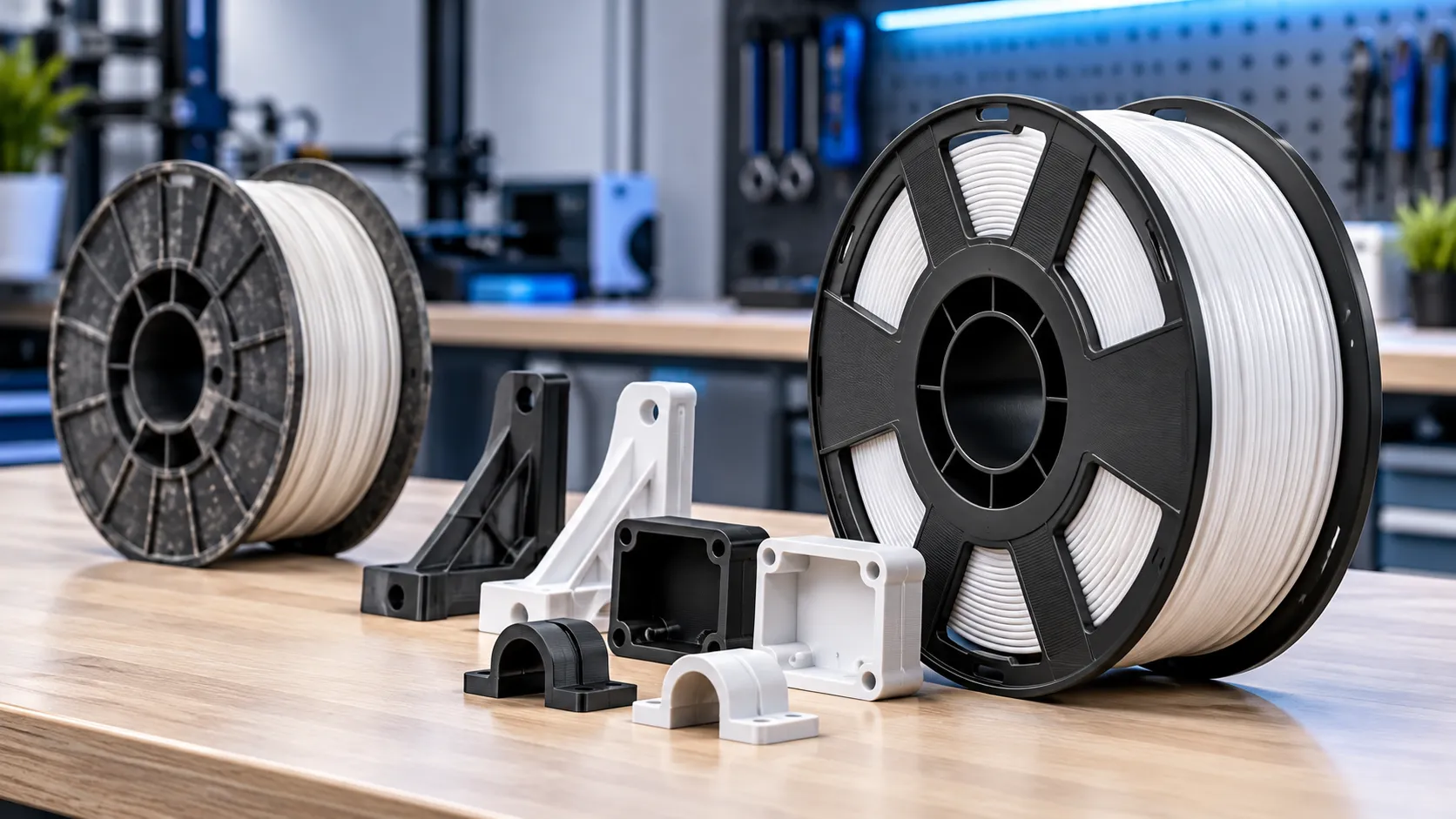
PolyLite PLA Pro discontinued is now an official product transition, not a rumor. Polymaker says the older PolyLite PLA Pro will be phased out by the end of 2026 and replaced by the new Polymaker PLA Pro. The practical question is whether the replacement keeps the toughness users liked while improving speed and consistency.
Research-based comparison, updated October 2026. Disclosure: This article contains affiliate links. If you buy through them, we may earn a commission at no extra cost to you. This comparison is based on official specifications; we have not physically tested the new formula. See the Affiliate Disclosure.
PolyLite PLA Pro discontinued: what Polymaker is changing
The company is simplifying its branding by moving products out of the older PolyLite family and into clearer material names. Polymaker PLA Pro is the direct successor. Retail stock will not disappear everywhere on the same day, so old and new spools may coexist throughout the transition.
That means you do not need to panic-buy remaining PolyLite stock. For ongoing production, the better approach is to qualify the new material with your own parts and migrate profiles deliberately.
The new PLA Pro is designed for faster printing
Polymaker lists speeds up to 300 mm/s for the replacement, with a 210–230°C nozzle range and a 30–60°C bed. Cooling should be enabled, and neither an enclosure nor a hardened nozzle is required for the standard material. Those specifications fit modern high-speed printers better than many older PLA Pro profiles.
| Setting | New Polymaker PLA Pro | Migration advice |
|---|---|---|
| Nozzle | 210–230°C | Start near the middle, then tune by flow rate |
| Bed | 30–60°C | Use the surface maker’s guidance |
| Print speed | Up to 300 mm/s | Acceleration and hotend flow still set the limit |
| Cooling | Fan on | Reduce only when layer bonding needs priority |
| Drying | 55°C for 6 hours | Useful after open storage or visible moisture symptoms |
Do not reuse the old profile blindly
An old PolyLite PLA Pro profile is a reasonable starting point, but the new product is not merely a label change. Recheck nozzle temperature, maximum volumetric flow, pressure advance, retraction and cooling. A fast printer may reach its hotend’s melt limit before it reaches the advertised travel speed.
For a production migration, print a temperature tower, flow calibration, dimensional coupon and the most failure-prone section of your real part. Compare weight, fit, layer bonding and impact behavior rather than judging only surface finish.
Is the new material the best replacement?
For users who want the closest official path, yes: Polymaker explicitly positions Polymaker PLA Pro as the replacement. It should be the easiest choice when purchasing documentation, color availability and future profiles matter.
However, “best” depends on why you used PolyLite PLA Pro. If your priority was maximum impact resistance, compare tough PLA or PETG alternatives. If you chose it for dimensional accuracy and easy printing, regular high-speed PLA may be enough. For warm or sun-exposed parts, a heat-resistant PLA or ASA can be more suitable.
What to do with existing PolyLite spools
Freeze the known-good profile
Keep the old material name, batch and machine settings attached to proven jobs.
Archive a benchmark print
Save a dimensional and surface-quality reference before changing formulas.
Qualify the new PLA Pro
Run temperature, flow and dimensional checks using the replacement spool.
Separate production lots
Do not mix old and new material inside a validated run until equivalence is demonstrated.
Buying advice
Check whether a listing is the legacy PolyLite product or the new Polymaker PLA Pro before ordering. Keep labels and profiles distinct during the transition.
Amazon links use tag filamentpicks-20. Use Polymaker code BALUTAVLAD for 15% off your first eligible order. Purchases may support FilamentPicks at no extra cost to you.
Frequently Asked Questions
PolyLite PLA Pro discontinued: when does the change happen?
Polymaker says the product will be officially discontinued by the end of 2026. Store inventory may remain after that date.
What replaces PolyLite PLA Pro?
The official replacement is Polymaker PLA Pro, a new formula and brand name aimed at tough, high-speed functional printing.
Can I use the same settings?
Use the old profile only as a starting point. The official range for the replacement is 210–230°C with print speeds up to 300 mm/s, so recalibration is recommended.
FilamentPicks Verdict
The PolyLite PLA Pro discontinued transition should be manageable. Polymaker has named a direct successor and published practical settings. New Polymaker PLA Pro is the safest first replacement to qualify, but critical parts still deserve a controlled side-by-side test before the old material disappears.