

👉 Related on FilamentPicks: Bambu Filament vs Third-Party: Is the Price Premium Worth It? (2026) — ranked picks from community data.
A newly granted Chinese utility patent describes a self-adjusting nozzle assembly for FFF (fused filament fabrication) 3D printers that could eventually eliminate one of the most tedious routines in desktop printing: physically swapping nozzles to change between detail work and fast, strong prints. The patent, numbered CN 224311213 U and granted on June 2, 2026 to an individual inventor named Yu Huangliang, describes a variable extrusion head built around two concentric nozzles — an inner nozzle and an outer sleeve nozzle — that can shift their relative position to create two distinct extrusion states from a single hotend.
How the Mechanism Is Designed to Work
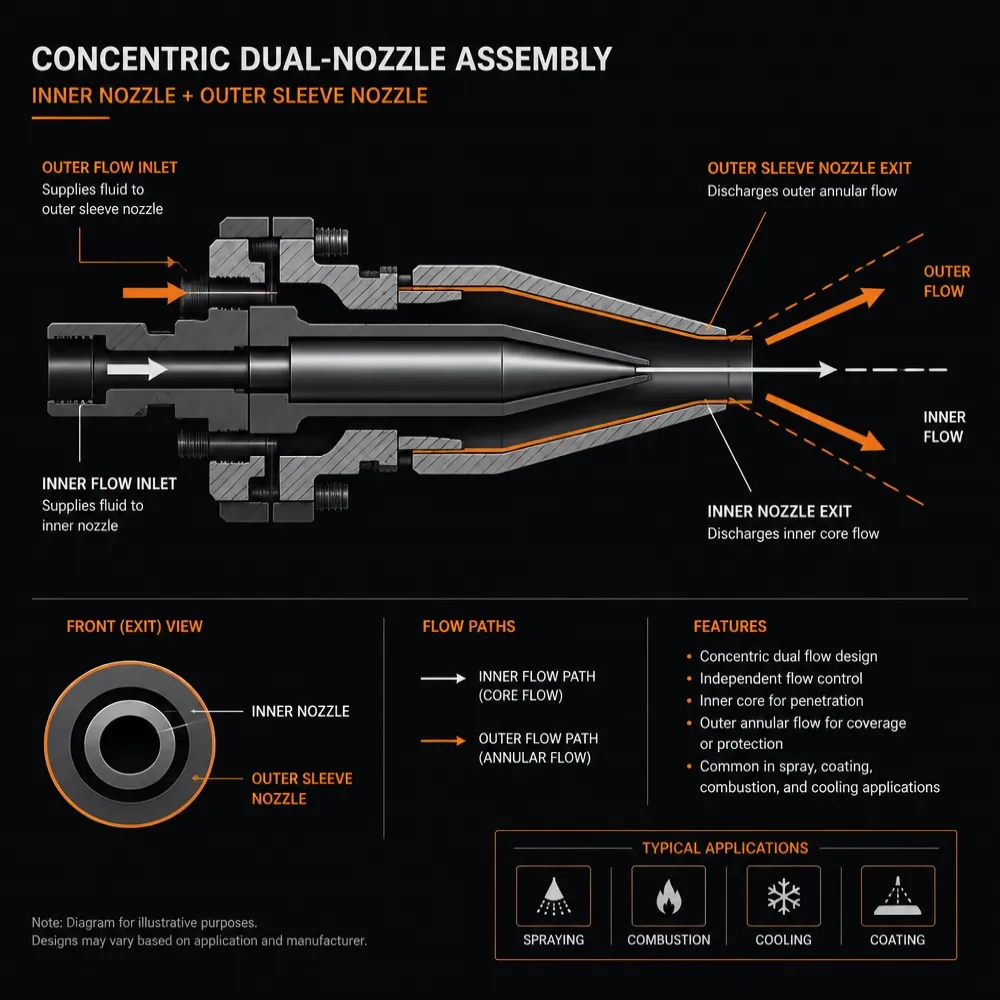
According to the patent drawings, the assembly combines a small motor, a gear train, and a toothed sleeve that moves the outer nozzle axially around the stationary inner nozzle. By changing how far the outer sleeve extends relative to the inner nozzle tip, the effective extrusion geometry changes — in practice, functioning something like switching between a small-diameter nozzle for fine detail and a larger-diameter nozzle for faster, higher-volume extrusion, without removing anything from the hotend. The heater block and thermal components are integrated into the moving assembly, which is what allows the geometry change to happen without a cooldown cycle.
The Everyday Problem This Targets
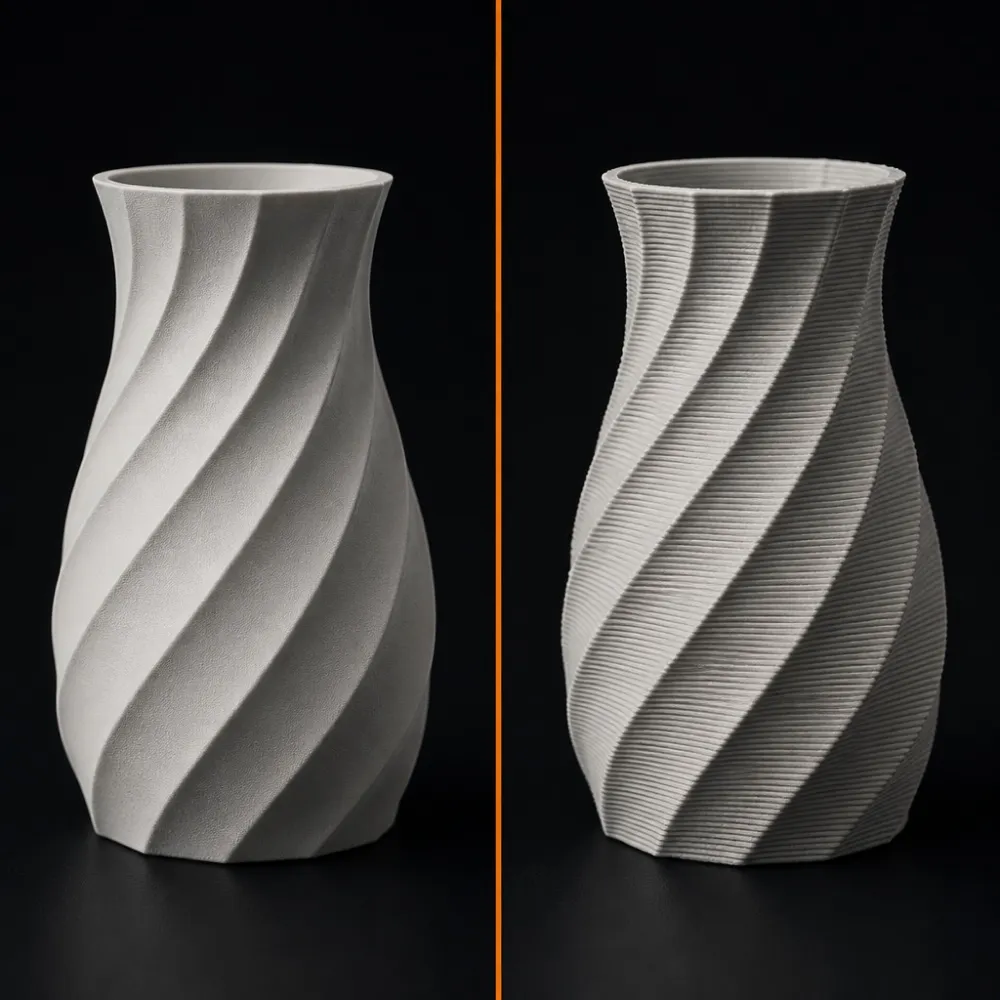
Anyone who has run a print farm or simply alternated between detail miniatures and large functional parts knows the routine: heat up the hotend, carefully unscrew the old nozzle with the right tools while avoiding burns, thread in the replacement, retighten to spec, then re-level the bed and recalibrate the Z-offset and first-layer flow before trusting the new setup. A 0.2mm nozzle delivers crisp detail but prints painfully slowly on large objects; a 0.6mm or 0.8mm nozzle blasts through bulky parts in a fraction of the time but loses fine surface detail. Most makers pick one nozzle size and live with the tradeoff for weeks or months at a time, because the swap process is enough of a hassle that it discourages frequent changes — let alone changing nozzle behavior mid-print.
From Granted Patent to Real Product Is a Long Road
It’s worth being clear about what this filing actually represents. A Chinese utility patent has a lower bar for approval than an invention patent and doesn’t require proof that the design works reliably in practice — it simply establishes a priority claim on the concept. The assignee here is an individual inventor, not a printer manufacturer, and there’s no indication any company has licensed or is building toward this design. The mechanism itself also raises obvious engineering questions: a motor, gear train, and moving toothed sleeve sitting on the print head adds weight, cost, and new points of failure, and any moving mechanical assembly near a hot nozzle introduces calibration challenges that would need to be solved before this could be trusted for unattended printing.
Why This Matters to the Community
Even as a speculative concept, this patent points toward a direction that several parts of the 3D printing ecosystem are already moving in. Bambu Lab’s AMS and multi-material systems have shown that automation users will tolerate added hardware complexity if it removes a manual step — a variable nozzle that automatically shifts line width for infill versus perimeters, or for support structures versus visible surfaces, would fit naturally into that ecosystem’s philosophy of “set it and let the printer figure it out.” For the Voron community, however, this kind of design would face immediate scrutiny. Voron builders obsess over toolhead mass, since every extra gram on a CoreXY gantry translates directly into more ringing and lower achievable speeds before quality suffers — a motorized nozzle assembly would need to be extremely light and well-balanced to be acceptable on a performance-oriented build. Prusa owners will likely view this through the lens of the Nextruder’s existing quick-swap nozzle system, which already solves part of this problem — tool-less nozzle changes in seconds — without adding moving parts during printing itself, raising the question of whether a fully automated variable nozzle is solving a problem that modular quick-swap designs have already addressed more simply. And for the budget-focused Creality segment, history suggests that if a variable-nozzle concept like this ever matures into a reliable, low-cost component, it’s exactly the kind of feature that could get bundled into an entry-level printer within a couple of years, the same way direct-drive extrusion and CoreXY motion went from “premium feature” to “standard on a $200 printer.” For now, this is a patent worth bookmarking rather than a feature to expect on your next printer — but it’s a useful signal of where engineers are looking for the next real improvement in extrusion hardware.
Source: Fabbaloo / Via FilamentPicks Automation