

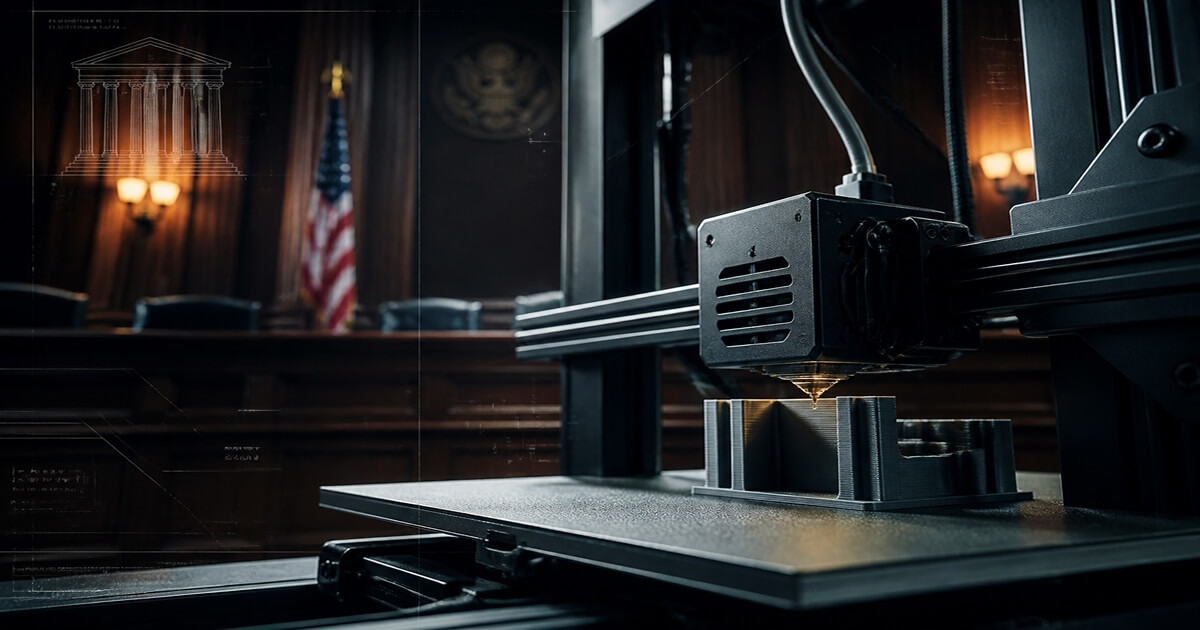
A piece of California legislation that has been quietly worrying the desktop 3D printing world just took a significant step forward. AB 2047, formally known as the California Firearm Printing Prevention Act, has passed the state Assembly and is now headed to the Senate. The bill aims to curb the use of 3D printers to manufacture firearms and illegal firearm components — but critics within the additive manufacturing community argue its approach could have sweeping, unintended consequences for ordinary makers, schools, small businesses, and hobbyists who have nothing to do with illegal weapons manufacturing.
What AB 2047 Would Actually Require
At its core, AB 2047 would require any 3D printer sold or transferred within California to include what the bill describes as “firearm-blocking technology.” Manufacturers would need to certify that their printer models meet the state’s requirements, and California would maintain and publish an official list of approved, compliant machines. Beginning in 2029, any 3D printer not on that approved list could no longer be legally sold or transferred within the state.
The bill includes an exemption for printers used exclusively for prop-making, though critics say this carve-out is poorly defined given that the same printers used by hobbyists, prop makers, engineers, and students are often one and the same machine.
Industry Pushback: “You’re Regulating a Tool, Not the Crime”
The most prominent voice pushing back against AB 2047 is David Tobin, Executive Producer of Joel Telling’s 3D Printing Nerd channel and Executive Director of the Community Manufacturing Initiative. In an interview, Tobin argued that the bill targets the wrong layer of the problem entirely.
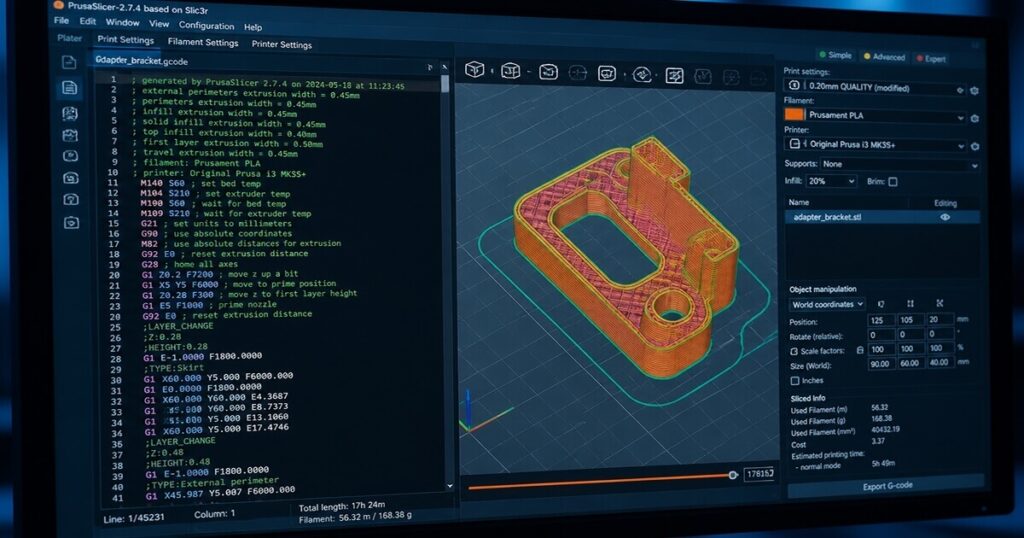
“The things they’re trying to make illegal are already illegal,” Tobin said. “The focus should be on enforcing existing laws rather than creating regulations that affect everyone who uses a 3D printer.” His central technical objection is that consumer 3D printers work by following geometric instructions — G-code — and have no inherent way to “understand” that a given file represents a firearm component, especially given the prevalence of open-source firmware, custom toolpaths, and modified slicers across the hobbyist ecosystem.
Tobin also raised concerns about precedent: “California is often viewed as a leader on technology issues, and if this becomes the model, other states could follow with similar legislation.” He warned that manufacturers facing a patchwork of state-specific compliance requirements might simply stop selling certain printer models in California altogether, or push the broader market toward more locked-down, less open systems.
A Growing Coalition — and the Other Side of the Debate
Opposition to AB 2047 in its current form has attracted support from a notably broad cross-section of the desktop 3D printing world. A public “Letter From the Industry” has gathered backing from organizations including Prusa Research, Printed Solid, MAKE Magazine, Maker Faire, VORON Design, Cocoa Press, and others, alongside individual signatories such as RepRap founder Dr. Adrian Bowyer and Prusa Research founder Josef Prusa.
It’s worth noting, however, that AB 2047 has its own serious backers. The bill is supported by groups including Everytown for Gun Safety, and proponents point to a real and documented rise in arrests and law enforcement seizures involving 3D printed firearms and components across multiple states. Supporters argue that as 3D printing technology becomes more capable and more widespread, some form of regulatory response to printable firearms is inevitable, and that AB 2047 represents an attempt to get ahead of that trend rather than react to it after the fact. Critics like Tobin don’t dispute that illegal 3D printed firearms are a genuine issue — their argument is specifically about whether this particular regulatory mechanism can work as described, and whether it is the right tool for the underlying problem.
Why This Matters to the Community
For owners of Bambu Lab, Prusa, Creality, and Voron printers — the very ecosystems most central to the desktop 3D printing hobby in the US — AB 2047 is worth watching closely, regardless of where one lands on the underlying policy debate.
The most immediate concern is around open-source and DIY platforms like Voron. Voron printers are typically self-sourced and self-assembled from individual components rather than purchased as a complete consumer product from a single manufacturer, running open-source firmware such as Klipper. It’s genuinely unclear how a certification and “approved list” framework designed around commercially manufactured printers from companies like Bambu Lab, Prusa, and Creality would even apply to a printer that a maker built themselves from a parts kit, a 3D-printed frame, and open-source software they compiled at home. VORON Design’s decision to sign onto the industry opposition letter reflects exactly this uncertainty.
For Bambu Lab, whose X1, P1, and A1 series have become some of the best-selling consumer 3D printers in North America, the practical risk is supply availability. If compliance becomes burdensome or technically infeasible for certain models, manufacturers could choose to simply not offer those models for sale in California — the largest state market in the country — which would directly affect California-based makers, schools, and small businesses looking to buy or replace machines after 2029.
For Prusa, whose founder and company have both publicly signed onto the opposition letter, this is also a brand-identity issue. Prusa has built much of its reputation on open-source hardware and firmware, values that sit somewhat uneasily alongside a regulatory framework requiring proprietary “blocking technology” embedded at the firmware or hardware level.
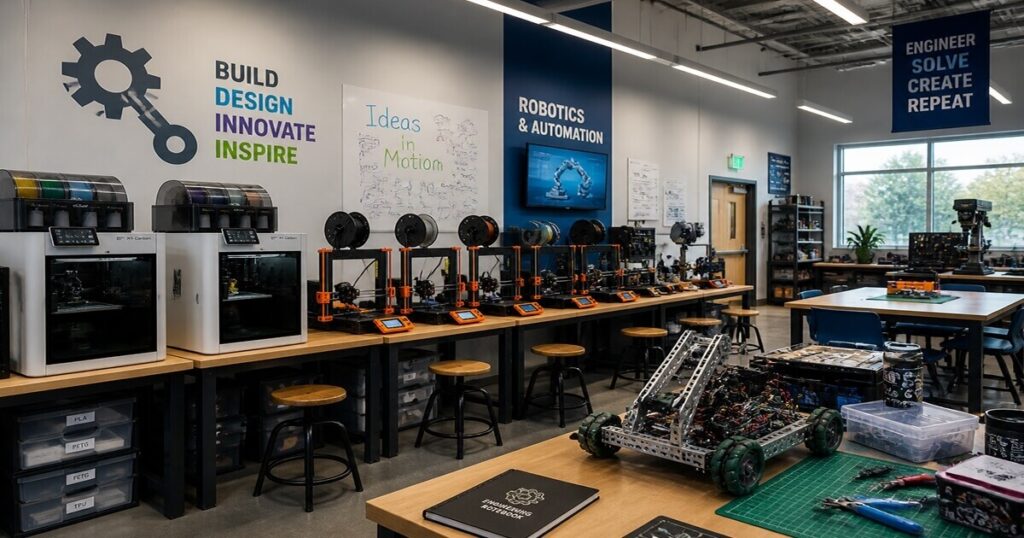
And for the broader maker ecosystem — makerspaces, school robotics and engineering programs, university labs, and small manufacturing startups, many of which rely on exactly the kind of affordable, flexible, multi-purpose printers this bill would regulate — the outcome in the California Senate could set a template that other states watch closely. Whatever form the final legislation takes, makers in California and beyond would be wise to follow its progress through the Senate over the coming months, as the practical compliance details could directly shape which printers remain available to buy in the years ahead.
Image credit: filamentpicks.com