

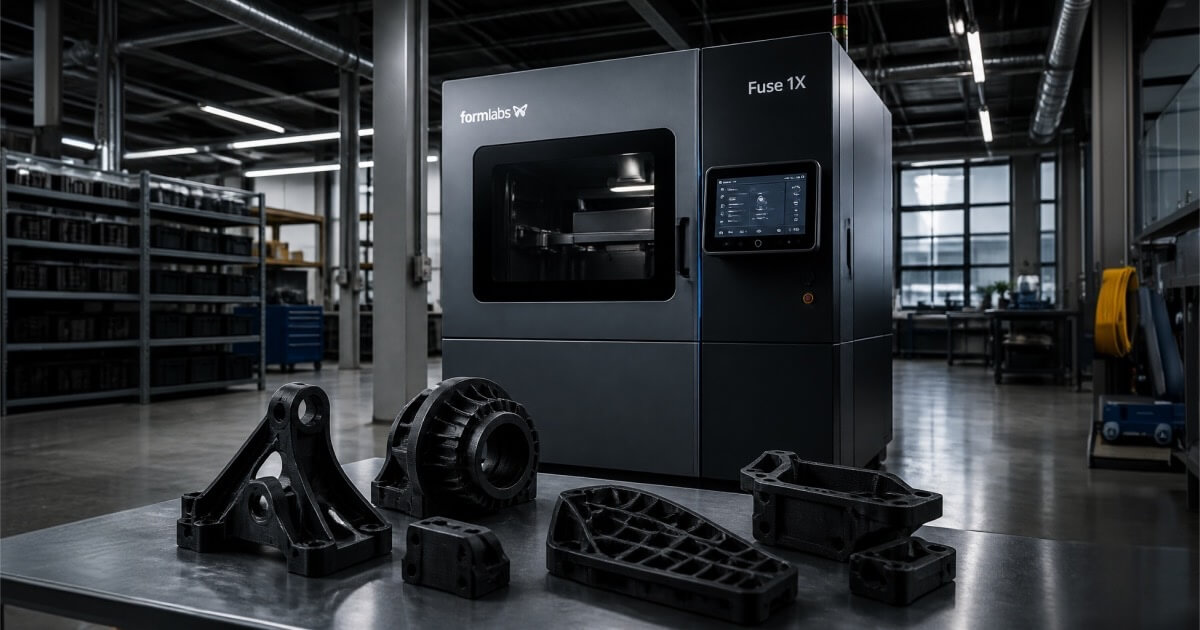
Formlabs has just redrawn the map of industrial additive manufacturing with the launch of the Fuse X1, a selective laser sintering (SLS) platform built not for hobbyist desks or prototyping labs, but for factory floors churning out thousands of end-use nylon parts. It’s the most aggressive move the Massachusetts-based company has made since it first popularized affordable resin printing for desktop users, and it signals that the line between “desktop” and “industrial” 3D printing is continuing to blur at a rapid pace.
From a $25K Prototyping Tool to an $85K Production Powerhouse
To understand how big a leap the Fuse X1 represents, it helps to look at where Formlabs came from. The company’s previous SLS system, the Fuse 1+, was designed as a low-cost, reliable entry point into nylon powder printing, primarily aimed at engineers producing prototypes and small batches. It retailed around the $25,000 mark and helped thousands of small shops get their first taste of SLS without committing to a six-figure industrial system.
The Fuse X1 is a different animal entirely. Starting at $85,000, it features a build volume of 330 x 330 x 565 mm — a notably tall, vertically oriented chamber that hints at how Formlabs intends operators to load and unload parts efficiently. According to Formlabs, the system can deliver up to 50% lower cost per part and three times the throughput of comparable industrial powder bed fusion machines, while occupying less than half the footprint of “legacy” SLS and Multi Jet Fusion (MJF) equipment.
A Not-So-Subtle Challenge to HP’s MJF Dominance
Perhaps the most telling detail in Formlabs’ announcement is how often the company references MJF, HP’s signature powder-based manufacturing process. MJF has long been favored for production runs because of its speed advantage over traditional laser-based SLS — but it’s also notorious for long cooling cycles between print jobs, which can stretch turnaround times considerably.
Formlabs appears to be targeting that exact weakness. The company says the Fuse X1 can achieve packing densities of up to 30%, compared to MJF’s typical 10-15%, meaning significantly more parts can be nested into a single build and produced per cycle. Combined with a claimed five-minute changeover process — where an operator simply rolls a pre-loaded build unit into the printer — the Fuse X1 is clearly engineered to compress the dead time that has historically made MJF systems expensive to operate at scale.
Smarter Hardware: AI Vision and 13-Zone Thermal Control
Underneath the industrial styling, the Fuse X1 packs in a substantial amount of new engineering aimed at consistency and quality control:
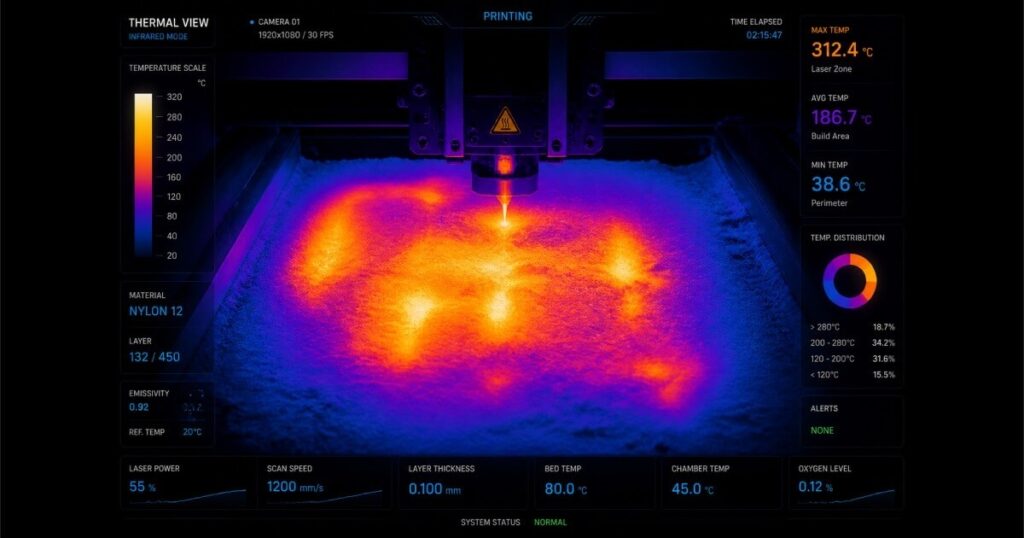
- Computer vision layer monitoring: A thermal imaging system inspects every printed layer in real time. If a part is flagged as defective, the system stops printing material into that part for subsequent layers, saving powder and machine time.
- 13-zone adaptive thermal control: The build chamber is divided into thirteen independently monitored thermal zones that automatically adjust to changing conditions during a print.
- 700x more thermal data points per second: Formlabs claims the X1 captures dramatically more thermal telemetry than its previous systems, allowing for much finer-grained process control.
- Modular system design: The Fuse X1 isn’t just a printer — it ships as part of an ecosystem that includes a dedicated post-processing station and a powder handling unit.
Already Running in Production: 30,000 Parts and Counting
Formlabs says several major manufacturers have been quietly beta testing the Fuse X1 for months, with more than 30,000 parts already produced on the platform. The company is also opening up a Fuse X1 production service through its existing Form Now on-demand manufacturing arm, meaning businesses that aren’t ready to buy an $85K machine outright can access the technology as a service starting immediately.
Why This Matters to the Community
At first glance, an $85,000 industrial SLS system might seem worlds away from the desktop FFF machines that dominate home workshops — the Bambu Lab X1 Carbons, Prusa MK4s, Creality K2 Plus units, and scratch-built Vorons that make up the backbone of the maker community. But the Fuse X1 matters to that community in several very real ways.
First, there’s the trickle-down effect that has defined the entire history of desktop 3D printing. Today’s $200 hobbyist printers inherited heated beds, closed-loop motion control, and multi-material capability from systems that were once strictly industrial. As Formlabs pushes further up-market with the X1 and reinvests in its lower-tier Fuse line, expect the technologies validated here — AI-driven layer inspection, adaptive thermal zoning, rapid changeover mechanisms — to eventually inform the next generation of prosumer SLS and even FFF systems aimed at serious makers and small businesses.
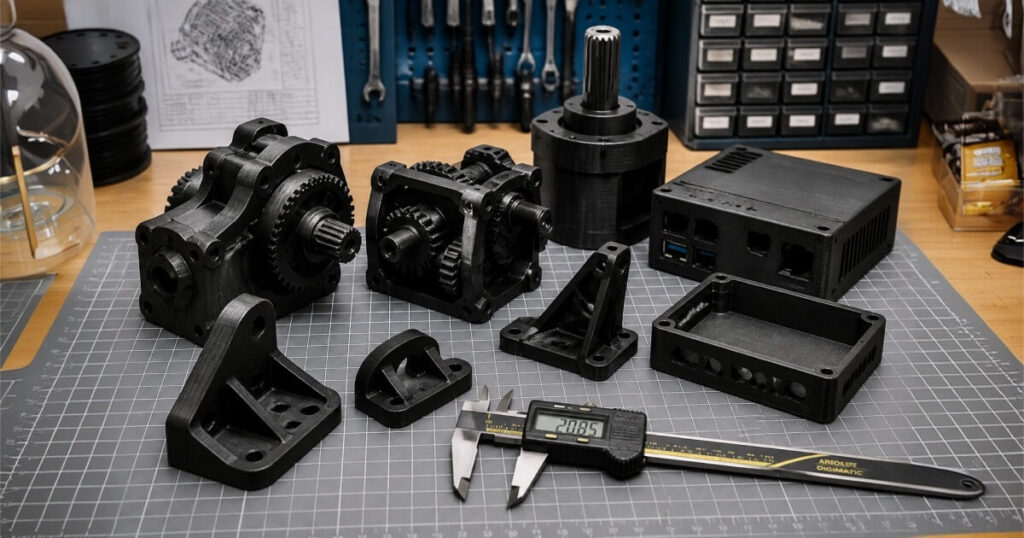
Second, the Form Now production service angle is immediately relevant. Many Bambu Lab, Prusa, and Voron owners regularly hit the limits of FFF for functional parts that need to be made from durable, isotropic nylon — think gearboxes, brackets, or end-use enclosures for 3D printer upgrades themselves. With Formlabs expanding its on-demand SLS manufacturing capacity via the X1, makers and small print farms could see faster turnaround and lower per-part costs when they outsource nylon components that their FFF machines simply can’t replicate reliably.
Finally, there’s the competitive pressure angle. By directly attacking HP’s MJF market position on cost-per-part and throughput, Formlabs is intensifying competition across the entire polymer powder bed fusion segment. Increased competition at the industrial tier historically pushes prices down across the board, which is good news for makerspaces, university labs, and small manufacturing startups — many of which are staffed by the same enthusiasts who cut their teeth on Bambu Lab and Prusa machines — that are eyeing their first step into industrial-grade SLS technology.
Image credit: Filamentpicks.com