

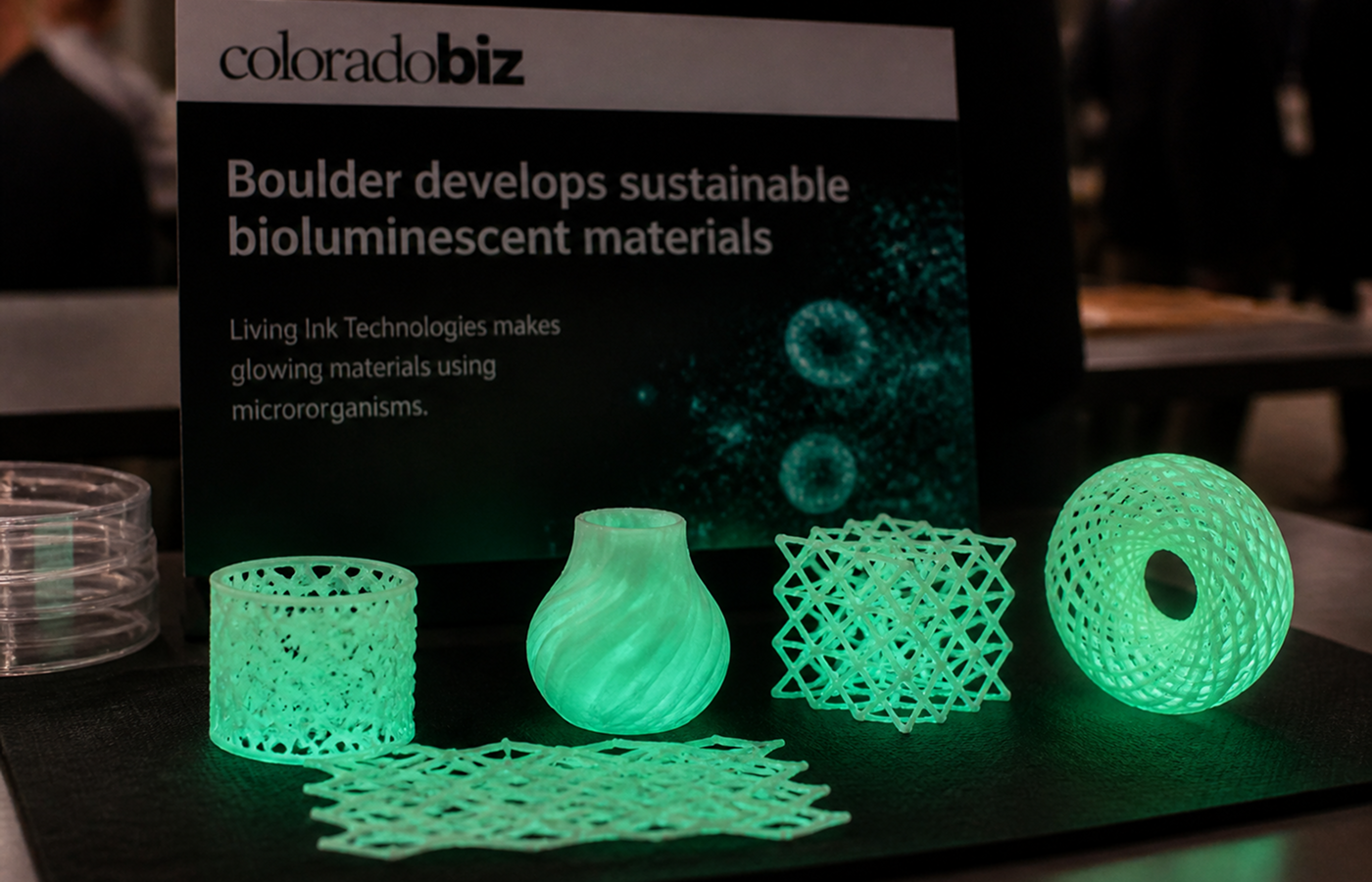
Living Organisms Successfully Embedded Inside 3D Printed Scaffolds
Imagine a 3D printed object that glows in the dark naturally, without relying on electrical power or short-lived phosphorescent chemicals. Researchers at the University of Colorado Boulder (CU Boulder) have brought this closer to reality. The team has successfully engineered light-emitting living materials by embedding a marine microorganism inside 3D printed alginate scaffolds.
According to the study published in Science Advances, the bioluminescence is activated chemically, allowing the printed structures to sustain a steady glow across four weekly cycles. This remarkable combination of organic biology and additive manufacturing offers an eco-friendly, self-sustaining alternative to traditional lighting and display materials, proving that living cells can survive and function perfectly within a printed medium over long periods.
Why This Matters to the 3D Printing Community
Every 3D printing enthusiast has tried Glow-in-the-Dark filament at some point, and almost all of them share the same complaint on community forums: it is incredibly abrasive. Standard glow filaments are packed with strontium aluminate, a harsh compound that can ruin a standard brass nozzle in a matter of hours, forcing hobbyists to upgrade to hardened steel or ruby nozzles. Furthermore, the glow usually fades within minutes of taking it out of the light.
CU Boulder’s research offers a visionary look into a future where “glow” features are completely organic and non-abrasive. Instead of toxic, coarse powders chewing through our extruder gears, advanced makers could eventually utilize bioluminescent bio-inks. For the specialized DIY community already experimenting with open-source bioprinting and hydrogels at home, a sustainable, month-long natural light source represents an exciting frontier for custom cases, decorative art, and functional design.